World Cancer Day: Bladder Cancer Explained – Causes, Symptoms, and Early Detection
February 12,2026
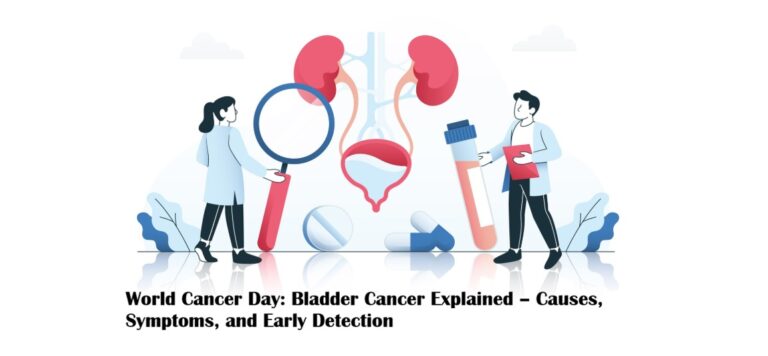
World Cancer Day takes place on February 4th as a day for everyone to observe cancer awareness and its preventive measures. Bladder cancer affects thousands of people each year, but most people lack knowledge about this disease, according to research.
What Is Bladder Cancer?
Let’s start with the basics. Your bladder is that balloon-like organ sitting in your lower belly that holds urine. Urinary Bladder cancer occurs when the cells that line the bladder start to grow uncontrollably and develop into tumors. Doctors sometimes call these growths a bladder tumor or bladder neoplasm, which is just medical speak for an abnormal mass.
Not every growth means cancer. Some bladder tumors are benign, meaning they’re not dangerous. But when we’re talking about urinary bladder cancer, we mean the malignant type – the kind that needs proper treatment.
Most cases start in what doctors call the urothelial cells. These are the cells that line the inside of your bladder. Think of them as the wallpaper of your bladder, if you will. When these cells go rogue, that’s usually where the trouble begins.
Why Does This Happen to Some People?
Several things can contribute to developing a bladder neoplasm. Smoking is the biggest culprit by far. When you smoke, those nasty chemicals don’t just stay in your lungs. They travel through your blood, get filtered by your kidneys, and end up sitting in your bladder. Day after day, they damage the bladder lining. In fact, nearly half of all bladder cancer cases are linked to smoking. That’s a staggering number.
Then there’s workplace exposure. If you’ve worked around certain industrial chemicals – think paint factories, textile plants, or facilities that produce dyes – your risk goes up. These chemicals have names that are hard to pronounce, but what matters is that prolonged contact with them isn’t good for your bladder.
Getting older plays a role, too. Most people diagnosed with urinary bladder cancer are above 55. Your family history can matter as well, though not as much as lifestyle factors. And if you’ve had chronic bladder infections or radiation treatment near your pelvis, these can also increase your chances of developing a bladder tumor.
Warning Signs You Shouldn’t Ignore
Sometimes, the first hint that something isn’t right is surprisingly simple: blood in the urine. You might notice it yourself — the colour may look slightly pink, rusty, or even deep red. At other times, everything appears normal, and the blood is so minimal that it only shows up in a routine lab report.
Bladder cancer does not always arrive with dramatic symptoms. In many cases, the signs are subtle and easy to overlook. Still, certain changes deserve attention:
- Needing to use the restroom more often than you usually do
- A stinging or burning sensation while passing urine
- Feeling a strong urge to urinate but passing only a small amount
- Noticing that your urine stream feels weaker than before
- Lower back pain that keeps coming back without a clear reason
- A dull ache or discomfort in the pelvic area
It’s common to dismiss these changes. Many people assume it’s just part of getting older or blame it on a temporary urinary infection. And sometimes, that is exactly what it is. But when these symptoms don’t settle within a couple of weeks, it’s wise not to ignore them.
A simple check-up can bring clarity. When it comes to your health, it is always better to investigate early rather than wait and wonder.
Men Face Higher Risks
Here’s something that might catch you off guard: bladder cancer in men is three to four times more common than in women. Men have historically been more likely to smoke and work in those risky industrial jobs I mentioned earlier.
That said, women shouldn’t think they’re off the hook. When women do get urinary bladder cancer, it’s sometimes caught later because doctors might mistake the symptoms for urinary tract infections or menopause-related changes. So, regardless of gender, if something feels off, speak up.
If you’re a man over 50, especially if you’ve smoked or worked with chemicals, keep bladder cancer in men on your radar. Regular check-ups become more important as you age.
How Doctors Figure Out What’s Going On?
For bladder cancer diagnosis, first, your doctor will talk with you about your symptoms and health history, smoking habits, your job, and any family history of cancer. Then come the tests. You’ll provide a urine sample that gets checked for blood and abnormal cells. If that raises concerns, the next step is usually a cystoscopy. I know it sounds intimidating, but here’s what happens: a thin tube with a tiny camera goes into your bladder so the doctor can actually see what’s happening inside. If they spot anything suspicious, they’ll take a small tissue sample right then and there.
Imaging tests like CT scans might follow. These help doctors see whether cancer has spread beyond the bladder. The whole bladder cancer diagnosis process is designed to give doctors a complete picture before deciding on treatment.
Why Catching It Early Changes Everything?
Early detection is absolutely crucial with urinary bladder cancer. When doctors catch it before it spreads into the deeper layers of the bladder wall, survival rates shoot up above 95%. That’s incredibly encouraging.
This is exactly why you shouldn’t ignore those warning signs. Your body is pretty good at telling you when something’s wrong – you just need to listen and take action.
What You Can Do Starting Today?
World Cancer Day is a reminder to look at your own health a little more closely. Take a few minutes and ask yourself some honest questions. Do you smoke? If yes, quitting is one of the strongest steps you can take to lower your chances of developing a bladder neoplasm. It is not always easy, but it is worth it.
If you work in an environment where chemicals are part of the job, do not take safety lightly. Follow the guidelines laid down for your workplace. Wear the recommended protective gear every single time. Small precautions, taken consistently, matter more than we realize.
And if you have been postponing a visit to the doctor, try not to delay it any further. Book the appointment. If you have noticed any bladder cancer symptoms, do not ignore them out of hesitation or embarrassment. Doctors discuss urinary concerns every day as part of their routine practice. For them, it is simply healthcare.
It may also help to talk about this with people close to you, especially older men who may have a higher risk. Sometimes, a gentle conversation about health is enough to encourage someone to finally schedule that long-pending check-up.
Your health is not something to put aside for later. Pay attention to what your body is telling you. Learn the warning signs. Acting early can make a real and lasting difference.
Frequently Asked Questions:
1. Does cataract surgery hurt?
Honestly, most people are surprised by how comfortable it is. The eye is numbed with drops, so you don’t really feel pain — maybe just a little pressure for a few minutes.
2. How much time does the surgery take?
The actual procedure is quite quick. It usually wraps up in about 15 to 20 minutes. You rest for a short while after, and then you’re allowed to go home the same day.
3. How soon can I get back to my routine?
Light activities can usually be resumed within a day or two. That said, doctors normally advise avoiding heavy lifting, swimming, or touching the eye for a few weeks.
4. Would you consider cataract surgery safe?
Yes, it is one of the most frequent eye surgeries. With good care and a well-experienced surgeon, the occurrence of serious complications is quite low.
5. Will I still need glasses afterward?
That depends on the lens chosen during surgery. Some people still use reading glasses, while others find they rely on them much less than before.
References & Citations:
https://www.maxhealthcare.in/blogs/bladder-cancer-types-causes-and-symptoms
https://worldbladdercancer.org/news_events/recognising-symptoms-of-bladder-cancer-new-patient-factsheet-available/
https://www.pacehospital.com/bladder-cancer-types-causes-symptoms-treatment-prevention




Leave a Reply