Anterior and Posterior Placenta: Difference Between Anterior And Posterior Placenta
January 22,2026
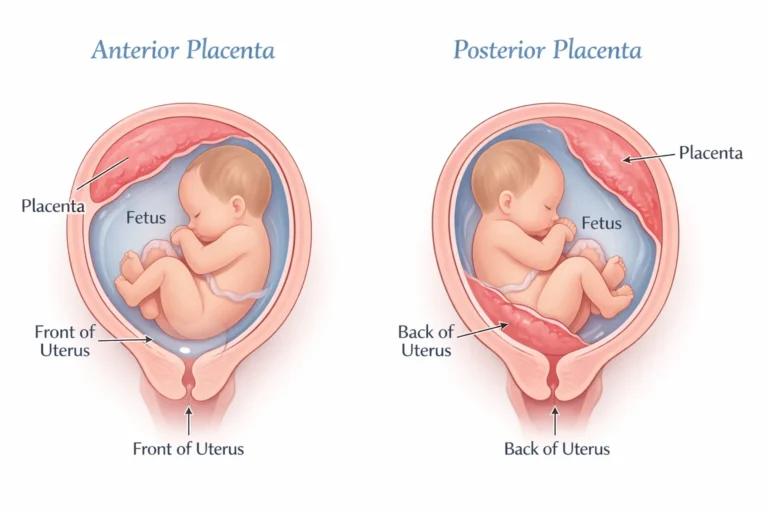
Most women don’t really register these terms during the scan. The lights are low, the gel is cold, and attention is usually on the heartbeat or the moving limbs on the screen. It’s later, sometimes much later, when the report is read properly, that the words anterior placenta or posterior placenta start to stand out.
They tend to sound heavier than they are.
These words are not diagnoses.
They are simply descriptions.
What These Terms Are Referring To
The placenta needs a place to attach inside the uterus. The uterus is not a flat surface. It has a front wall, a back wall, and other surfaces as well.
When a scan report mentions anterior or posterior, it is noting which wall the placenta has attached to.
Anterior placenta means the placenta is attached to the front wall of the uterus, closer to the abdominal side. Posterior placenta means it is attached to the back wall, closer to the spine.
That is the full meaning of these terms. No judgement or risk is attached to them on their own.
Does the Placenta Work Differently Based on Its Position?
The placenta’s role remains the same regardless of where it sits. It supplies oxygen and nutrients to the baby and removes waste products. This function does not change depending on whether the placenta is on the front wall or the back wall.
Blood flow and nutrient exchange are determined by placental health and uterine blood supply, not by orientation.
For this reason, doctors usually do not focus on placental position unless there is another finding on the scan that needs discussion.
How Placental Position Can Affect What You Feel
The one place where women may notice a difference is in how movements are felt, especially in the second trimester.
With an anterior placenta, early movements may feel faint or delayed. The placenta lies between the baby and the abdominal wall, so the first kicks may not be felt clearly at first. This is a common situation and not a sign that something is wrong.
With a posterior placenta, movements are often felt earlier or more distinctly because there is less tissue between the baby and the abdominal surface.
This difference often leads to comparisons between pregnancies, but it does not reflect how active or healthy the baby is.
As pregnancy progresses and movements become stronger, this difference usually becomes less noticeable.
What Placental Position Does Not Affect
Placental position does not influence several things that people often worry about.
It does not affect:
- the baby’s growth
- oxygen delivery
- nutrition
- the likelihood of a normal delivery
Comparing anterior placenta vs posterior placenta does not predict how labour will progress or whether a cesarean section will be needed. These decisions depend on many other factors.
Placental Position and Ultrasound Scans
Placental location can sometimes affect how easily images are obtained during an ultrasound, especially earlier in pregnancy.
An anterior placenta may require the sonographer to spend a little more time adjusting angles to see certain structures clearly. This is a technical issue related to imaging and does not indicate a medical problem.
As the uterus grows, visualisation generally improves regardless of placental position.
Clearing Up a Common Source of Confusion
Anterior or posterior describes which wall the placenta is attached to. It does not describe how close the placenta is to the cervix.
Conditions such as placenta previa are different findings altogether and are clearly mentioned in reports when present.
Placental position also does not decide whether the baby will be head-down or breech. Fetal position changes naturally during pregnancy and depends on several factors.
When Placental Placement Needs Monitoring
In most pregnancies, placental position is simply recorded and followed as part of routine care.
Early in pregnancy, the placenta may appear to move upward as the uterus expands. This is a normal effect of growth rather than true movement of the placenta.
Only in less common situations, such as low-lying placentas or abnormal attachment—does placental placement require closer follow-up. These situations are identified by specific scan findings, not by the anterior or posterior label alone.
A Final Word for Reassurance
Reading medical reports without explanation can be unsettling, especially during pregnancy. Placental position is one of those details that often sounds important but usually carries no negative meaning.
Anterior and posterior placenta are common findings. When no additional notes accompany them, it generally means there is nothing concerning to address.
At Simira Diagnostics, placental position is carefully assessed during obstetric ultrasounds, and any finding that requires follow-up is clearly communicated to the referring doctor.
For most women, these words are simply part of routine reporting, and nothing more.
Frequently Asked Questions
1) What does anterior placenta mean?
It means the placenta is on the front wall of the uterus. That’s all it means.
2) What does posterior placenta mean?
It means the placenta is on the back wall of the uterus. Also normal.
3) Is one position safer than the other?
No. Both support the baby equally well.
4) Why am I not feeling movements much yet?
With a front-wall placenta, movements can feel dull at first. They usually pick up later.
5) Does this affect baby growth?
No. Growth is not linked to placental wall position.
6) Will this decide normal delivery or surgery?
No. Placenta wall position doesn’t decide that.





Leave a Reply