MRI (Magnetic Resonance Imaging): What Is MRI Scan & Results
January 13,2026
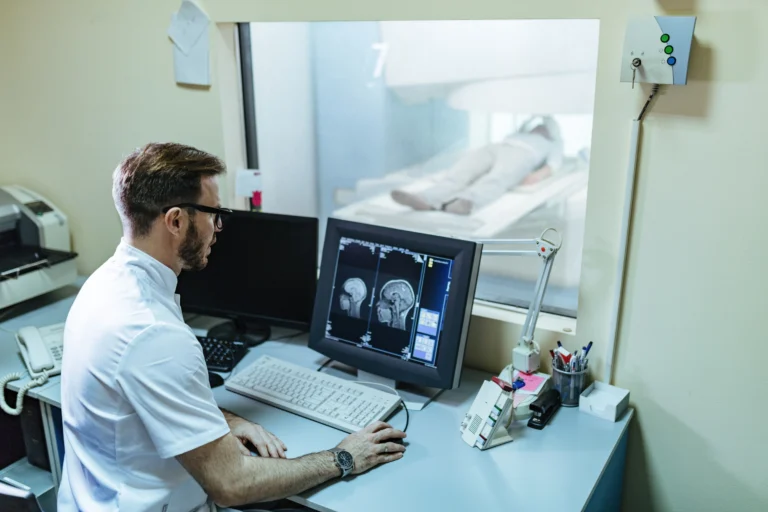
The doctor has written an MRI… should I be worried?
That question comes up almost every single day.
A patient looks at the prescription, looks back at us, and then quietly asks, “What exactly is this test? Is it serious?” Sometimes there’s worry. Sometimes confusion. And sometimes people are just scared of the machine they’ve heard so much about.
If you’re feeling that way, pause for a moment. Let’s talk this through calmly.
MRI full form what does it actually mean?
The MRI full form is Magnetic Resonance Imaging.
Yes, it sounds technical. But don’t let the name intimidate you.
In very simple terms, an MRI is a scan that helps doctors see inside your body in great detail, without surgery, needles, or radiation. It’s often advised when the doctor needs a clearer picture than what X-rays or ultrasounds can provide.
Most people asking about the MRI full form aren’t trying to learn science. They just want reassurance. And that’s completely fair.
What is an MRI and why do doctors recommend it?
So, what is an MRI really?
Think of it as a highly detailed camera for the inside of your body. It shows soft tissues, like muscles, nerves, ligaments, brain tissue, very clearly. These are areas where regular scans sometimes fall short.
Here’s a real-life situation we see often.
A middle-aged gentleman once came in with lower back pain that had lasted months. Painkillers helped briefly, physiotherapy didn’t. His X-ray looked almost normal. An MRI scan later showed a disc pressing on a nerve. Suddenly, the pain made sense.
That’s why doctors ask for an MRI test. Not because something is “very wrong,” but because they need clarity.
What is an MRI Test Used for?
Patients often ask, “Why can’t I just do a normal scan?”
The answer depends on what the doctor is looking for.
An MRI test is commonly advised for:
- Persistent back or neck pain
- Brain-related symptoms like headaches, seizures, or memory issues
- Knee, shoulder, or joint injuries
- Spine problems
- Soft tissue swelling or unexplained pain
- Certain abdominal or pelvic conditions
If you’re wondering what is MRI scan used for, the simplest answer is this:
It helps doctors see what other tests cannot.
What is MRI scan and how does it work?
Now let’s address the machine itself, because that’s where most anxiety comes in.
An MRI scanner uses a strong magnetic field and radio waves. There is no radiation involved. That’s an important thing to remember.
Your body naturally contains tiny particles that respond to magnetic signals. The MRI machine reads those signals and converts them into detailed images. You don’t feel any of this happening.
No heat.
No shocks.
No pain.
Just noise. And yes, it can be loud.
What happens during the MRI test?
You’ll be asked to lie down on a moving table. The table slides into the scanner slowly. Depending on the body part being examined, your head or upper body may be inside the machine.
The scan can take anywhere between 20 to 45 minutes. During that time, you’ll hear tapping or knocking sounds. That’s normal. It doesn’t mean anything is wrong.
You’ll be asked to stay still. That’s important because movement can blur the images. If you feel uncomfortable at any point, you can always communicate with the technician.
Many patients come out and say, “That’s it? I thought it would be worse.”
Claustrophobia and MRI – let’s talk honestly
This is a big concern. And it’s a valid one.
If you feel uncomfortable in closed spaces, please say so beforehand. You’re not the only one. Not even close.
The idea of lying still inside a machine can feel overwhelming. But knowing what to expect helps more than people realize. Our technicians explain the process step by step and keep checking in during the scan.
Sometimes, just hearing a calm voice makes all the difference.
Is an MRI test safe?
Yes. For most people, an MRI test is very safe.
Because MRI uses magnets, certain metal implants can be a concern. That’s why you’ll be asked detailed questions before the scan.
Always inform the staff if you have:
- Pacemakers
- Metal implants
- Surgical clips
- Any previous surgeries involving metal
These checks aren’t formalities. They’re there to protect you.
Do you need any preparation before an MRI scan?
Usually, preparation is minimal.
You may be asked to remove:
- Jewellery
- Watches
- Hair clips
- Credit cards
Sometimes, depending on the scan, you may be asked to fast for a few hours. If contrast is required, everything will be explained clearly beforehand.
Nothing is done without your understanding.
Why MRI results matter so much
An MRI scan often answers questions that have been lingering for weeks or months.
Why does the pain keep coming back?
Is it nerve-related?
Is surgery necessary, or can it be avoided?
Clear images lead to clearer decisions. And that can save time, stress, and unnecessary treatments.
That’s the real value of an MRI test.
A gentle word before you book your scan
If you’ve reached this point because you’re anxious about an MRI, that’s okay. Fear usually comes from the unknown. Once things are explained properly, the fear tends to soften.
The MRI full form may sound heavy, but the experience itself is usually straightforward and manageable.
At Simira Diagnostics, we understand that patients don’t just come in for scans, they come in with questions, worries, and expectations. Our focus is not only accurate imaging, but also making sure you feel comfortable and informed throughout the process.
If you’ve been advised to have an MRI and are unsure about anything, preparation, safety, or the scan itself, don’t hesitate to reach out. Sometimes, a simple conversation can make a medical test feel far less intimidating.
References & Citations
The information shared in this blog is based on established medical guidelines, radiology best practices, and clinical experience. For readers who would like to explore further, the following trusted sources provide detailed, patient-friendly explanations of MRI technology:
- Radiological Society of North America (RSNA)
MRI patient guide and safety information via RadiologyInfo.org
- American College of Radiology (ACR)
Clinical use cases, MRI safety protocols, and imaging standards
- National Health Service (NHS, UK)
Public-facing explanations on MRI scans, preparation, and safety
- Mayo Clinic
Patient education resources on MRI scans and diagnostic imaging
FAQs
Q1. Is an MRI scan painful?
No. An MRI scan is painless, though the machine can be noisy during the procedure.
Q2. Does MRI involve radiation?
No. MRI uses magnetic fields and radio waves, not X-ray radiation.
Q3. How long does an MRI test usually take?
Most MRI tests take between 20 and 45 minutes, depending on the scan area.
Q4. Can I move during an MRI scan?
You’ll need to stay still during the scan to ensure clear images, but you can communicate with the technician anytime.






Leave a Reply