Not sure which tests to take? Share your prescription with us and our team will call you to book tests for you.
Request a Call Back
High Creatinine Levels: Causes, Symptoms, and Smart Ways to Lower Them
October 31,2025
Have you ever stopped to think about the word “creatinine” on your lab report? You’re not the only one. When a doctor says, “your creatinine levels are a bit high,” most people don’t think about creatinine. But what does that mean?
In simple terms, creatinine is like the smoke that comes out of your body’s engine, which is your muscles. When your muscles use energy, they make this waste product. Your kidneys usually work well as filters, getting rid of that “smoke” (creatinine) through urine.
But if your creatinine level is high, it could mean that your kidneys aren’t working right, or it could just mean that you need to change your diet, lifestyle, or how much water you drink.
In this guide, we’ll go over everything you need to know about high creatinine levels, including what they mean, what can cause them, symptoms to look out for, and how to handle them wisely.
What Does High Creatinine Actually Mean?
First, let’s get this straight: “high creatinine” doesn’t always mean that your kidneys are failing.
Your muscle mass, diet, age, sex, and hydration all affect your creatinine levels. So, a person who goes to the gym a lot might naturally have higher numbers than someone who doesn’t.
If the level goes above the healthy range, though, it could mean that your kidneys aren’t getting rid of waste properly.
Men: 0.7–1.2 mg/dL
Women: 0.5–1.0 mg/dL
Doctors usually want to know why your creatinine level is high. Before making a decision, they will look at more than just the number. They will also look at your medical history, lifestyle, and lab patterns.
Why Does Creatinine Rise?
1. Kidney-Related Causes
Your kidneys are like natural filters. When your muscles are hurt or stressed, creatinine starts to build up in your blood.
Some common reasons are:
Kidney infections — bacterial infections that inflame kidney tissues.
Glomerulonephritis — when tiny kidney filters get swollen or scarred.
Kidney stones or urinary blockages — anything that blocks urine flow can trap waste.
Chronic kidney disease or kidney failure — when kidneys gradually lose function.
2. Non-Kidney Causes
Not every rise in creatinine means your kidneys are in trouble. Sometimes, the answer is simpler:
Dehydration: Not drinking enough water concentrates your blood and raises creatinine temporarily.
High-protein diet: Too much red meat or protein supplements can nudge levels upward.
Intense exercise: Heavy workouts break down muscle fibers faster, releasing more creatinine.
Medications: Some antibiotics, painkillers, and heart drugs can interfere with kidney filtration.
Pregnancy: Fluid changes and increased metabolism can mildly raise levels.
So, if your report shows a sudden rise, take a deep breath, sometimes, it’s reversible and not as serious as it sounds.
How Do Doctors Check Creatinine Levels?
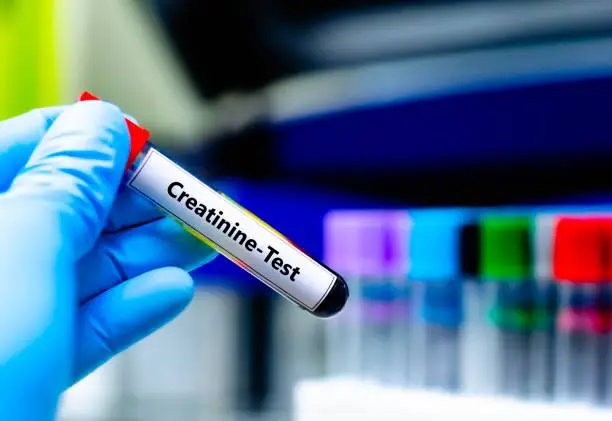
1. A blood test (serum creatinine)
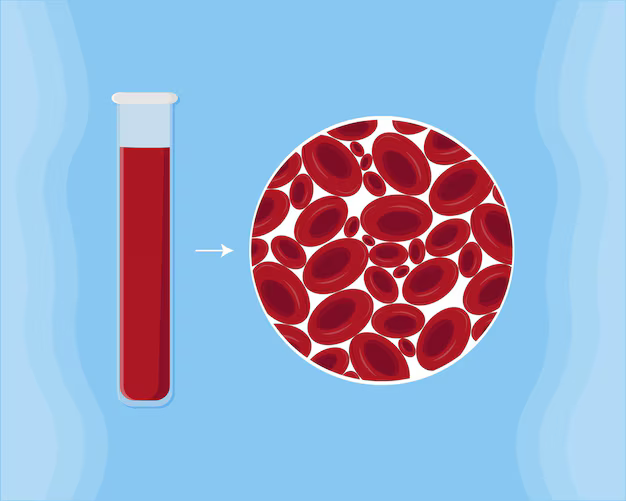
This is the test that most people take. A tiny amount of blood can show how much creatinine is in the blood.
2. Urine Test (Collecting for 24 Hours)
Doctors may ask for a full-day urine sample because creatinine levels change during the day. It helps figure out how much creatinine your kidneys filter over time, which is called creatinine clearance.
3. eGFR (Estimated Glomerular Filtration Rate)
Doctors often use your creatinine levels to guess your eGFR, which is a fancy way of saying how well your kidneys filter waste. A lower eGFR means that the kidneys work more slowly.
What Are the Symptoms of High Creatinine Levels?
This is the hard part: high creatinine levels don’t cause any symptoms. The real problem, on the other hand, is something else, like diabetes or a kidney infection.
Still, if your creatinine levels stay high, you might see:
Swelling in the feet, ankles, or around the eyes
Tiredness or weakness in the muscles
Feeling sick and throwing up
Changes in urination: less output, foamy, or dark urine
Not being able to breathe
Not wanting to eat or being confused
When kidney function drops a lot, these symptoms often show up. That’s why it’s so important to get regular checkups; your body doesn’t always “announce” early kidney problems.
What Does a High Creatinine Level Mean for You?
If your creatinine level is high, it’s like your body is sending you a warning. It doesn’t mean that damage has already happened, but it does tell you to look more closely.
For example, a small rise could just mean that you are dehydrated or working too hard.
For instance:
A steady rise could be a sign of early kidney problems.
A sudden rise could mean an infection, a blockage, or side effects from medication.
To find out what’s wrong, your doctor may do this test along with others like BUN (Blood Urea Nitrogen), urinalysis, or imaging scans.
What Can You Do to Lower High Creatinine Naturally?
The cause of the problem will determine the medical treatment, but there are some things you can do every day to help keep your creatinine levels in check:
1. Drink enough water, but not too much.
Drink water all day long. Drinking enough water helps your kidneys get rid of waste more quickly.
2. Moderate Protein Consumption
You don’t have to cut out protein, but you do need to find a good balance. Sometimes, instead of red meat, eat lentils, tofu, or other plant-based foods.
3. Don’t take creatine supplements.
Creatinine levels can go up artificially with fitness supplements. If you already have high readings, don’t take them.
4. Keep an eye on your blood sugar and blood pressure
Take care of your diabetes or high blood pressure carefully, as both can harm your kidneys.
5. Don’t take too many NSAIDs and painkillers.
Taking ibuprofen or similar drugs for a long time can put a lot of stress on your kidneys. Always talk to your doctor before taking them every day.
6. Follow a diet that is good for your kidneys
Think about fruits, vegetables, and fiber. Don’t eat too much salt or processed foods, as these make your kidneys work harder.
When Should You See a Doctor?
Talk to your doctor if you feel tired for no reason, have swelling, or notice changes in your urination. Also, if your test results keep showing high creatinine levels, it’s time to talk to your doctor.
It’s very important to find out what’s wrong early. Most kidney-related problems can be fixed or controlled well if they are found early enough.
Treatment Options for High Creatinine Levels
Treatment isn’t one-size-fits-all, it depends on the “why” behind your numbers.
Underlying Cause
Possible Treatment
Kidney infection
Antibiotics and hydration
High blood pressure
Antihypertensive medication
Diabetes
Blood sugar management
Dehydration
Fluids and electrolyte balance
Obstruction (stones/tumor)
Surgery or medication
Kidney failure
Dialysis or kidney transplant (in advanced cases)
With the right plan, most people can bring their creatinine level back to normal ranges within weeks to months.
The Big Picture: What High Creatinine Means for Your Health
A high creatinine level is not a judgment; it is a signal.
Your body is telling you, “Hey, something might need to be looked at.”
You can keep your kidneys healthy for a long time by drinking enough water, eating well, and going to the doctor regularly.
Keep in mind that catching kidney problems early can stop them from getting worse later.
FAQs About High Creatinine Levels
1. What does high creatinine mean in a blood test?
It usually means that your kidneys aren’t doing a good job of getting rid of waste. But dehydration, losing muscle mass, or some diets can also cause short-term spikes.
2. Can high creatinine levels go back to normal?
Yes, levels often go back to normal after treatment if the cause can be fixed, like dehydration or medication side effects.
3. What is a dangerously high creatinine level?
For men, anything over 1.2 mg/dL and for women, anything over 1.0 mg/dL is too high. If the levels are higher than 5.0 mg/dL, it could mean that the kidneys are not working well.
4. Does high creatinine always mean kidney failure?
Not always, but it can be a sign that something is wrong. Doctors use other tests, such as eGFR and urinalysis, to make sure.
5. Can exercise raise creatinine levels?
Heavy exercise can temporarily raise creatinine levels because it breaks down muscle and releases it into the blood.
6. What foods should I avoid if my creatinine level is high?
Cut back on red meat, processed foods, and snacks that are high in salt. Choose whole grains, fresh fruits, and vegetables.
7. How often should I get tested?
If you have diabetes, high blood pressure, or a family history of kidney disease, it is best to do it every 6 to 12 months.
Final Takeaway
Don’t worry if your creatinine level is high. Stop, think about it, and talk to your doctor.
Your kidneys are strong, but they still need care and attention. A few lifestyle adjustments and early interventions can go a long way toward keeping them healthy.
What do you do next? Book a checkup, drink some water, and listen to what your body’s telling you.




Leave a Reply