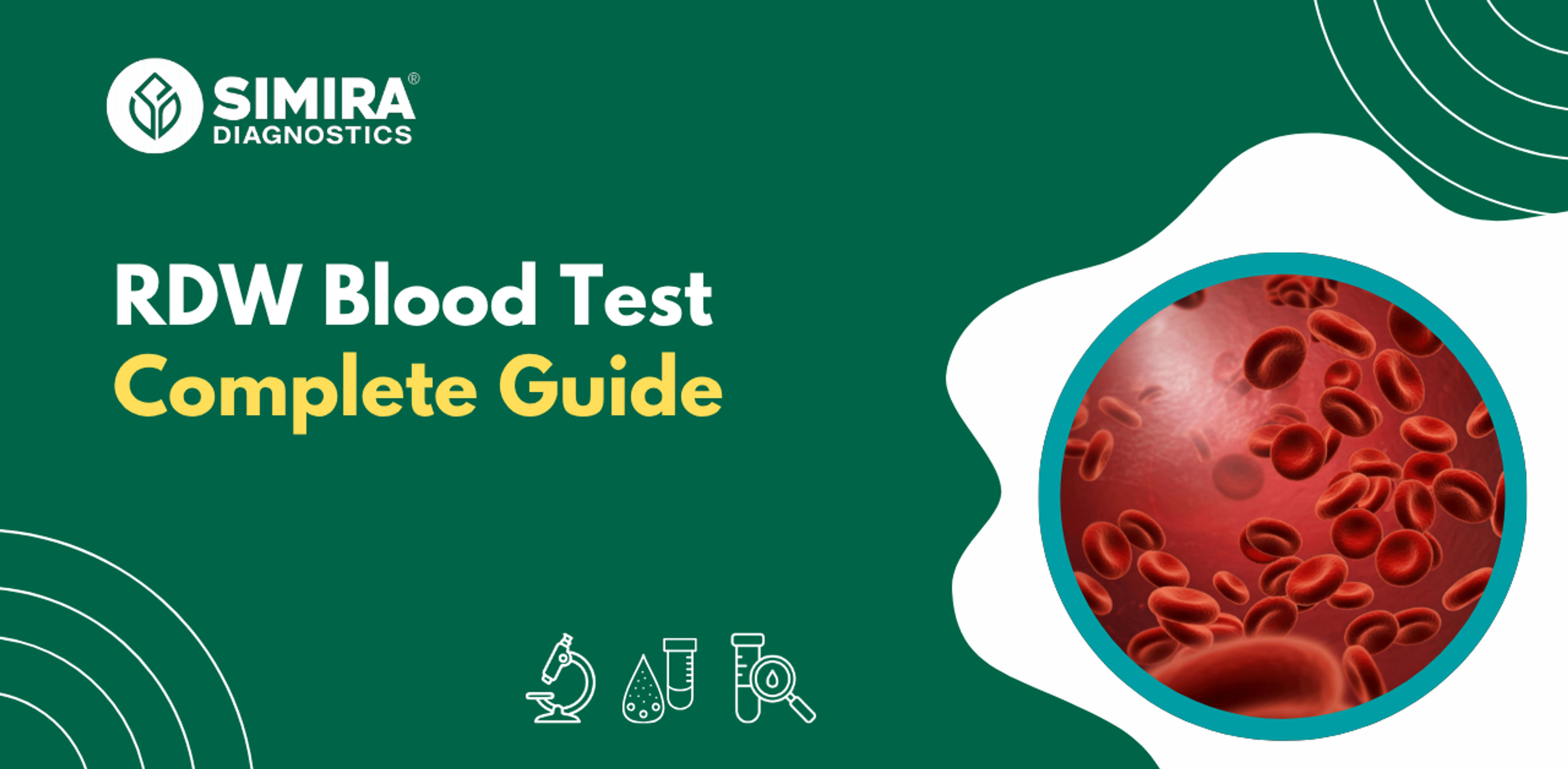
Red Blood Cell Distribution Width (RDW) is a blood test parameter that measures the variation in size of red blood cells. It is part of a Complete Blood Count (CBC) test. A high RDW may indicate anaemia or nutrient deficiencies.
A normal RDW value typically ranges from 11.5% to 14.5%. Doctors often interpret RDW along with MCV (Mean Corpuscular Volume) to diagnose different types of anaemia.
RDW is almost never ordered as a standalone test. Instead, it appears automatically on the report whenever you take a Complete Blood Count (CBC test) one of the most commonly performed blood tests in any pathology lab.
Think of it like this: if a CBC test is a full-body scan of your blood, the red blood cell distribution width is the section that focuses specifically on the uniformity of your red blood cells. For a deeper dive into the full CBC panel, see the Complete Blood Count (CBC) test in Navi Mumbai guide on our services page.
What Does an RDW Blood Test Measure?
The RDW value measures the coefficient of variation in the size of your red blood cells. It is usually reported in two forms on your lab report:
• RDW-CV (Coefficient of Variation): Expressed as a percentage. This is the most commonly reported value. A normal range is typically 11.5% to 14.5%.
• RDW-SD (Standard Deviation): Measured in femtolitres (fL). Normal range is usually 39 to 46 fL.
In simple words, RDW meaning comes down to this: it tells your doctor whether your red blood cells are uniform in size or whether there is a wide mix of small and large cells circulating in your bloodstream.
RDW vs MCV
RDW becomes truly powerful when interpreted alongside another value called MCV (Mean Corpuscular Volume). Together, they help classify the type of anaemia:
• High RDW + Low MCV: Often suggests iron-deficiency anaemia.
• High RDW + High MCV: May indicate vitamin B12 or folate deficiency, or liver disease.
• High RDW + Normal MCV: Could point to early nutritional deficiency or mixed anaemia.
• Normal RDW + Low MCV: Often suggests thalassemia trait.
What Is the Need for an RDW Blood Test?
Doctors recommend the RDW blood test for several important reasons. It is not just a number on a report-it is a clinical clue. Here is why you may need one:
• To screen for or confirm different types of anaemia.
• To investigate symptoms like persistent fatigue, weakness, dizziness, shortness of breath, or pale skin.
• To monitor patients with chronic conditions such as diabetes, kidney disease, or heart failure.
• To detect nutritional deficiencies, especially iron, vitamin B12, and folate.
• To assess overall cardiovascular and mortality risk in older adults, as supported by recent research.
A 2019 study published in the Journal of the American Heart Association found that higher RDW values are independently associated with increased risk of cardiovascular events, making the test increasingly relevant beyond anaemia screening.
What Is the Normal RDW Range?
Reference ranges vary slightly between laboratories, but the generally accepted normal values are:
• Adults (RDW-CV): 11.5% - 14.5%
• Adults (RDW-SD): 39 - 46 fL
• Children: Slightly higher upper limit, depending on age
Always cross-check your report with the reference range printed by your specific lab, since instruments and methods can produce minor differences.
What Does an RDW Blood Test High Result Mean?
An RDW blood test high result-anything above 14.5%-means there is greater variation in the size of your red blood cells than expected. This condition is called anisocytosis. Common causes include:
• Iron-deficiency anaemia (the most common cause worldwide)
• Vitamin B12 or folate deficiency
• Recent blood loss or blood transfusion
• Chronic liver disease
• Chronic kidney disease
• Bone marrow disorders
• Thyroid disorders
• Pregnancy (mild elevation is common)
A high RDW alone does not diagnose any disease. It is a signal that your doctor needs to look further-usually by checking iron studies, vitamin B12, folate, ferritin, or a peripheral blood smear.
What If RDW Is Low?
A low RDW is uncommon and usually not a cause for concern. It simply means your red blood cells are very uniform in size. If other CBC values are normal, no action is typically required.
What Is the Procedure for Performing an RDW Blood Test?
The RDW blood test procedure is quick, simple, and identical to any routine blood test. Here is what to expect:
1. Preparation: No fasting is required for an RDW test alone. However, if the doctor has ordered other tests along with the CBC, fasting may be needed.
2. Sample collection: A trained phlebotomist cleans the inner elbow area, ties a tourniquet, and draws a small blood sample (about 2-3 ml) into a purple-capped EDTA vial.
3. Lab analysis: The sample is processed in an automated haematology analyser, which calculates RDW along with the rest of your CBC parameters.
4. Reporting: Results are typically available within 4 to 24 hours, depending on the lab.
If you find it inconvenient to visit a lab, you can opt for home blood sample collection. A certified technician visits your home, draws the sample safely, and delivers the report digitally-making it especially convenient for elderly patients, busy professionals, and post-surgery recovery cases.
What Are the Risks of an RDW Blood Test?
The risks of an RDW blood test are minimal because it uses the same sample as a routine CBC test. Possible but uncommon side effects include:
• Slight pain or stinging at the needle site
• Mild bruising or swelling
• Lightheadedness or dizziness in some people
• Rarely, infection at the puncture site
There is no radiation, no dye injection, and no recovery time. Most people return to their normal activities immediately after the test.
Where to Get an RDW Blood Test in Navi Mumbai
If you are looking for a reliable RDW Blood Test in Navi Mumbai, choosing a trusted and NABL-certified diagnostic centre is important for accurate results and timely reporting. At Simira Diagnostics, the RDW test is included as part of the Complete Blood Count (CBC) Test, helping detect abnormalities related to anemia, nutritional deficiencies, and overall blood health.
With advanced diagnostic technology, experienced pathology support, and strict quality standards, Simira Diagnostics offers dependable blood testing services across Kamothe, Kharghar, Panvel, Nerul, Belapur, Vashi, and nearby areas of Navi Mumbai. Patients can also benefit from:
When choosing a lab for your RDW blood test in Navi Mumbai, look for the following:
• NABL certified for quality assurance
• Transparent pricing
• Same-day digital report delivery
• Free home blood sample collection within Navi Mumbai
• Qualified phlebotomists and proper sample handling
To book a hassle-free blood test in Navi Mumbai with home sample collection, you can schedule an appointment online and have a technician visit you at your preferred time slot.
How to Prepare for Your RDW Blood Test
To get the most accurate result from your RDW blood test, follow these simple tips:
• Stay well hydrated-drink water before the test.
• Inform the lab about any medications or supplements you are taking, especially iron, B12, or folate.
• Avoid heavy exercise immediately before the test.
• If a CBC is combined with lipid or sugar tests, follow the fasting instructions given by your doctor.
• Wear a loose-sleeved top for easy access to your arm.
Conclusion
Understanding what red blood cell distribution width means empowers you to take charge of your health. RDW is a small but mighty number on your CBC report-often the first clue that something is off, long before symptoms appear. Whether it is early iron deficiency, vitamin B12 issues, or a heart-related warning, the RDW blood test gives doctors a head start in diagnosis.
The best part? Getting tested has never been easier. With home blood sample collection now widely available, you can complete the entire process-from booking to digital report-without leaving your home.
Ready to take the next step? Book your CBC with RDW test today and get accurate, NABL-certified results delivered straight to you.