Introduction
Polycystic Ovary Syndrome (PCOS) is a common hormonal condition that affects women during their reproductive years. It can influence menstrual cycles, ovulation, skin health, weight management, and fertility. Symptoms such as irregular periods, acne, excessive facial hair, and unexplained weight changes may indicate a hormonal imbalance that needs medical evaluation.
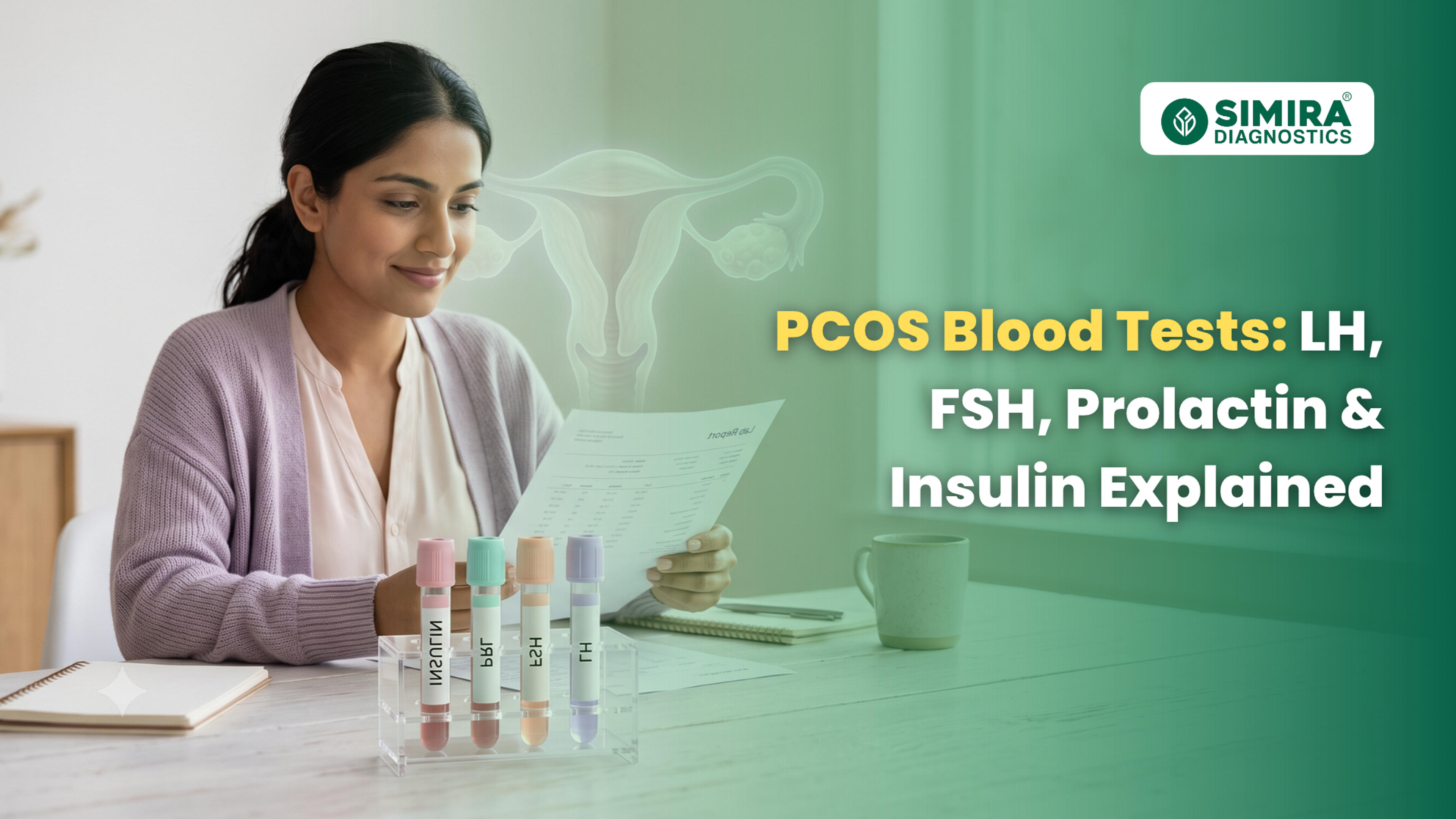
PCOS blood tests play an important role in understanding hormone levels and identifying related metabolic concerns. Tests such as Luteinizing Hormone (LH), Follicle-Stimulating Hormone (FSH), prolactin, and insulin may help doctors assess hormonal changes and investigate symptoms associated with PCOS.
However, no single blood test can confirm PCOS. A doctor considers symptoms, medical history, examination findings, and other investigations before making a diagnosis.
In this guide, we explain what LH, FSH, prolactin, and insulin tests reveal, when they may be recommended, and how they contribute to a comprehensive PCOS evaluation.
What is PCOS and Why are Blood Tests Important?
PCOS is a hormonal disorder that may affect ovulation and the body's response to insulin. Women with PCOS may experience irregular or missed periods, elevated androgen levels, acne, increased facial or body hair, and difficulty conceiving.
Some women with PCOS also have insulin resistance, which can increase the risk of prediabetes and type 2 diabetes.
Hormone blood tests for PCOS help doctors investigate possible hormonal imbalances and rule out other conditions that can cause similar symptoms.
Depending on individual symptoms, a doctor may recommend:
- LH (Luteinizing Hormone) test
- FSH (Follicle-Stimulating Hormone) test
- Prolactin blood test
- Blood glucose and selected insulin-related tests
- Total or free testosterone tests
- Thyroid-Stimulating Hormone (TSH) test
- Other investigations based on medical history
Not every woman needs all these tests. The appropriate investigations depend on symptoms, age, menstrual history, and the doctor's assessment.
1. LH Test for PCOS: What Does it Reveal?
Luteinizing Hormone (LH) is produced by the pituitary gland in the brain. It helps regulate the menstrual cycle and triggers ovulation.
In some women with PCOS, LH levels or the pattern of LH secretion may be altered. This can affect normal ovulation and menstrual regularity.
Why is the LH Blood Test Recommended?
An LH blood test may help doctors evaluate reproductive hormone patterns, especially when a woman has irregular periods or suspected ovulation problems.
Doctors may interpret LH levels alongside FSH, menstrual history, and other hormonal investigations.
What is the LH-to-FSH Ratio in PCOS?
The LH-to-FSH ratio compares the measured levels of luteinizing hormone and follicle-stimulating hormone.
Historically, a higher LH-to-FSH ratio has been associated with PCOS in some women. However, a high LH-to-FSH ratio is not a reliable standalone diagnostic test for PCOS. Many women with PCOS have a normal ratio, and an elevated ratio can occur for other reasons.
The ratio can also vary depending on the timing of the blood test and individual hormone patterns.
Key takeaway: LH testing can provide useful information about reproductive hormones, but it cannot confirm or rule out PCOS by itself.
2. FSH Test for PCOS: Understanding Ovulation and Ovarian Function
Follicle-Stimulating Hormone (FSH) is produced by the pituitary gland. It supports the growth and development of ovarian follicles, which contain developing eggs.
FSH levels change naturally throughout the menstrual cycle.
Why is FSH Testing Important in PCOS?
An FSH blood test may be recommended to help evaluate menstrual irregularities, ovulation problems, or other reproductive hormone concerns.
When assessed alongside LH and other clinical findings, FSH can help doctors understand the broader hormonal picture.
What Do FSH Levels Tell You?
FSH results must be interpreted according to the laboratory's reference range, the phase of the menstrual cycle, age, and clinical circumstances.
FSH testing may also help doctors investigate alternative explanations for irregular periods, including certain ovarian or pituitary conditions.
Important: There is no single FSH level that confirms PCOS. The result needs to be interpreted alongside symptoms and other investigations.
3. Prolactin Test for PCOS: Why is it Necessary?
Prolactin is a hormone produced by the pituitary gland. Its primary function is to support breast milk production after childbirth, but elevated prolactin levels can also affect menstrual function and fertility.
High prolactin levels, a condition called hyperprolactinemia, can cause irregular periods, absent periods, or difficulty becoming pregnant. Some people may also experience unexpected milk discharge from the breasts.
Because these symptoms can overlap with PCOS, doctors may recommend a prolactin blood test during the evaluation of suspected PCOS.
What Can High Prolactin Levels Indicate?
Elevated prolactin can be associated with several factors, including:
- Pregnancy and breastfeeding
- Certain medications
- Underactive thyroid function
- Stress or recent physical activity
- Pituitary gland conditions
A doctor may recommend repeat testing or additional investigations if the result is elevated.
Key takeaway: Prolactin testing helps identify other hormonal conditions that can mimic some symptoms of PCOS. It is not a test that directly diagnoses PCOS.
4. Insulin Test for PCOS: Understanding Insulin Resistance
Insulin is a hormone produced by the pancreas that helps glucose move from the bloodstream into the body's cells for energy.
Some women with PCOS experience insulin resistance, meaning the body's cells respond less effectively to insulin. The pancreas may compensate by producing more insulin.
Insulin resistance is associated with metabolic concerns and may contribute to increased androgen production in some women with PCOS.
Why is Insulin Testing Considered in PCOS?
Doctors may investigate glucose metabolism when evaluating PCOS, particularly if there are additional risk factors for diabetes.
Depending on the clinical situation, investigations may include:
- Fasting blood glucose
- HbA1c (glycated haemoglobin)
- Oral Glucose Tolerance Test (OGTT)
- Selected insulin measurements, when clinically appropriate
An OGTT is particularly useful for assessing glucose intolerance in people with PCOS. Fasting insulin measurements may sometimes provide additional information, but insulin assays and interpretation are not sufficiently standardized for a single result to serve as a universal diagnostic test for insulin resistance.
Does High Insulin Mean You Have PCOS?
No. High insulin levels do not automatically mean a person has PCOS, and normal insulin levels do not rule it out.
Insulin resistance can occur in people without PCOS, while women with PCOS may have different metabolic profiles.
Key takeaway: Assessing blood glucose and metabolic risk is an important part of PCOS care, even when menstrual symptoms are the main concern.
5. Other Blood Tests Doctors May Recommend for PCOS
LH, FSH, prolactin, and insulin are only part of the possible PCOS evaluation. Depending on symptoms, doctors may also recommend the following tests.
Testosterone Tests
Total or free testosterone testing helps assess elevated androgen levels. Increased androgens can be associated with acne, excess facial hair, and scalp hair thinning.
TSH Test
Thyroid-Stimulating Hormone testing helps assess thyroid function. Thyroid disorders can cause menstrual irregularities and may need to be ruled out.
17-Hydroxyprogesterone
This test may be used when a doctor needs to investigate non-classic congenital adrenal hyperplasia, a condition that can produce symptoms similar to PCOS.
Blood Glucose and HbA1c
These tests help assess blood sugar levels and identify diabetes or prediabetes. An OGTT may be more informative in some women with PCOS.
Lipid Profile
A lipid profile measures cholesterol and triglycerides. It may be recommended because PCOS can be associated with increased cardiometabolic risk.
Pelvic Ultrasound
A pelvic ultrasound may be recommended in selected cases to assess ovarian appearance and other pelvic conditions. However, ultrasound is not always required to diagnose PCOS, particularly when other diagnostic criteria are already met.
6. When Should You Consider PCOS Blood Testing?
Consider consulting a gynaecologist or healthcare professional if you experience:
- Irregular, infrequent, or missed periods
- Persistent acne or increased facial hair
- Unexplained changes in weight alongside other symptoms
- Difficulty conceiving or concerns about ovulation
- Darkened, thickened skin around the neck or underarms
- A family history of type 2 diabetes alongside possible PCOS symptoms
These symptoms do not necessarily mean you have PCOS. A medical consultation can help determine whether hormonal testing or other investigations are appropriate.
7. How to Prepare for PCOS Blood Tests
Preparation depends on which tests your doctor has recommended.
- Fasting: LH, FSH, and prolactin tests do not universally require fasting. Fasting may be requested for selected glucose or insulin tests.
- Test timing: Some reproductive hormone tests may be scheduled for a particular phase of the menstrual cycle. Follow your doctor's instructions.
- Medication: Tell your doctor about all medications and supplements you take. Do not stop prescribed medication without medical advice.
- Prolactin testing: Stress, exercise, and the timing of sample collection can influence results. Follow the laboratory's instructions, which may include resting before collection.
- Pregnancy: Inform your doctor if you are pregnant or could be pregnant, as this can affect the interpretation of certain hormone tests.
Always confirm the preparation requirements with your doctor or diagnostic laboratory before your appointment.
8. Can Blood Tests Alone Diagnose PCOS?
No. PCOS is diagnosed using a combination of clinical and laboratory findings.
In adults, diagnosis generally involves at least two of the following three features, after other relevant causes have been excluded:
- Clinical or biochemical evidence of elevated androgens.
- Ovulatory dysfunction, such as irregular menstrual cycles.
- Polycystic ovarian morphology on ultrasound, or an appropriately used anti-Müllerian hormone (AMH) test as an alternative in adults under applicable diagnostic guidance.
Not every patient needs an ultrasound or AMH test. The diagnostic approach differs for adolescents, in whom stricter criteria are used.
LH, FSH, prolactin, and insulin tests may help investigate symptoms or associated conditions, but none can independently establish a PCOS diagnosis.
Conclusion
PCOS can affect more than menstrual regularity. It may also influence androgen levels, ovulation, insulin sensitivity, and long-term metabolic health.
Understanding what LH, FSH, prolactin, and insulin tests reveal can help you have a more informed discussion with your doctor. The right combination of investigations depends on your symptoms, medical history, and individual risk factors.
If you are experiencing irregular periods, persistent acne, excess facial hair, or other possible signs of hormonal imbalance, consult a qualified healthcare professional for an appropriate evaluation.
Take charge of your hormonal health with informed testing and timely medical guidance.
Medical Disclaimer
Disclaimer: This article is intended for general educational and awareness purposes only. It is not a substitute for medical diagnosis, treatment or professional medical advice. Health screening recommendations vary according to age, sex, symptoms, medical history, medications, family history and individual risk factors. Please consult a qualified healthcare professional before deciding which tests or screenings are appropriate. Do not start, stop or change medication based solely on information in this article.