Introduction
Male fertility is influenced by several factors, including sperm count, movement, shape and the integrity of the genetic material carried by sperm. While a routine semen analysis evaluates important sperm parameters, it does not directly measure sperm DNA fragmentation.
A DNA fragmentation test is a specialised laboratory test that evaluates damage or breaks in the DNA inside sperm cells. It may provide additional information during a male fertility assessment when recommended by a qualified healthcare professional.
Understanding the meaning of DNA fragmentation, how DNA fragmentation analysis is performed and what the results can—and cannot—tell you can help individuals and couples make informed decisions about reproductive health.
At Simira Diagnostics, health awareness begins with reliable information. This guide explains the purpose, procedure and clinical considerations of sperm DNA fragmentation testing.
What is a DNA Fragmentation Test?
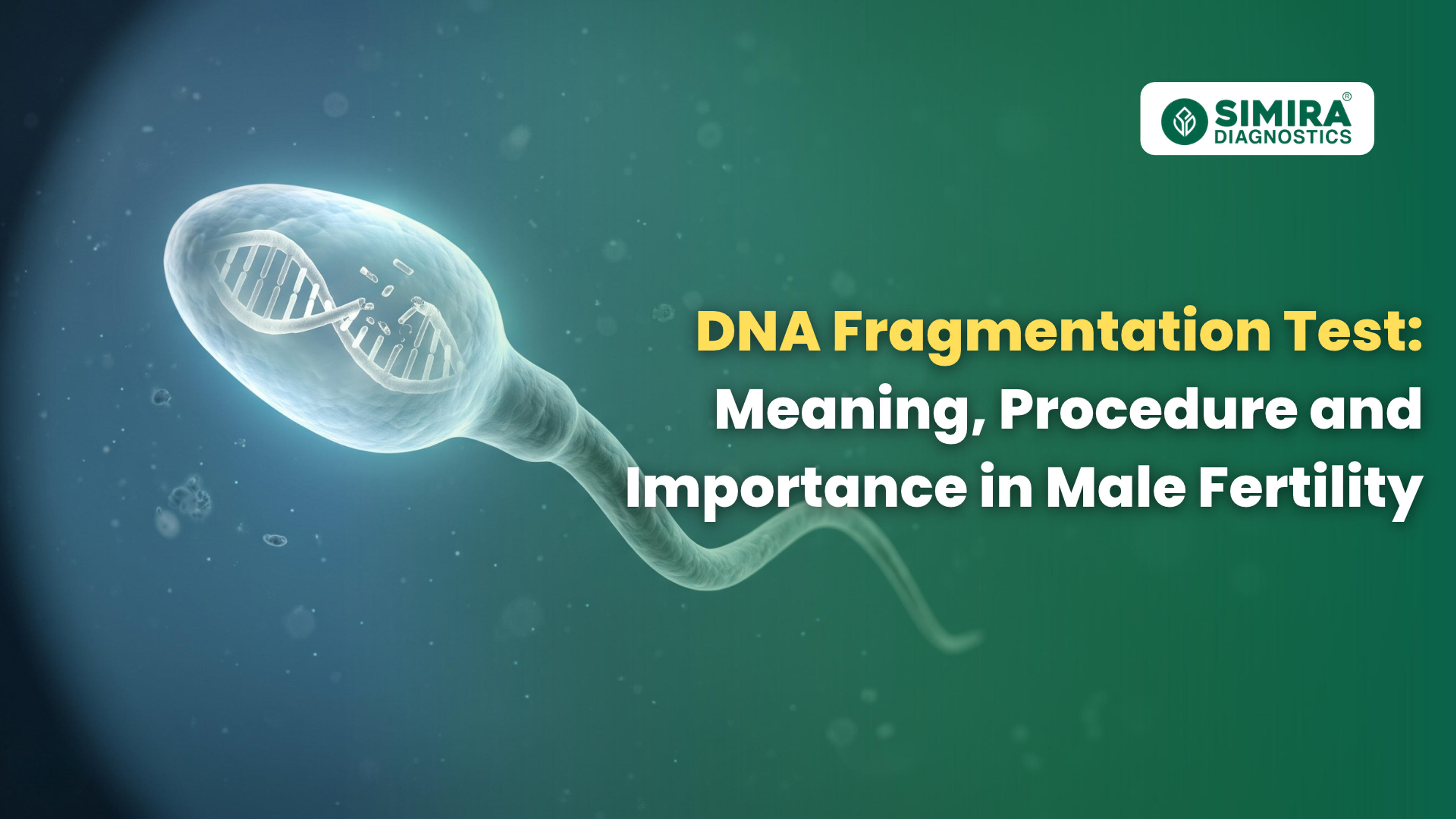
A DNA fragmentation test evaluates the integrity of DNA in sperm cells by detecting or estimating the extent of DNA damage, depending on the testing method used.
DNA contains the genetic instructions necessary for normal cell function and reproduction. Sperm carry half of the genetic material needed to form an embryo. When sperm DNA contains breaks or structural damage, it may be associated with reduced reproductive potential in some circumstances.
Sperm DNA fragmentation testing is also sometimes discussed as a DNA damage test in the context of male reproductive health. However, this term can refer to other tests in different medical or scientific settings. In fertility care, it is important to distinguish a sperm DNA fragmentation test from tests that assess DNA damage in other types of cells.
The test is generally considered an additional assessment rather than a replacement for a routine semen analysis.
DNA Fragmentation Meaning: What Happens to Sperm DNA?
Sperm DNA fragmentation refers to breaks in the genetic material within sperm cells. These may involve single-strand or double-strand DNA breaks.
Several biological processes can contribute to sperm DNA damage. These include oxidative stress, problems during sperm development and certain underlying reproductive or medical conditions.
Increased sperm DNA fragmentation has been associated with some fertility difficulties and adverse reproductive outcomes. However, the strength and clinical significance of these associations vary, and the result cannot independently determine whether a person will or will not conceive.
It is equally important to understand that a sperm cell may have DNA damage even when some routine semen parameters appear within their laboratory reference ranges. Conversely, an abnormal semen analysis does not automatically mean that sperm DNA fragmentation is elevated.
Why is DNA Fragmentation Analysis Important in Male Fertility?
A routine semen analysis and DNA fragmentation analysis evaluate different aspects of sperm health.
A semen analysis commonly assesses parameters such as sperm concentration, total sperm number, motility, morphology and semen volume. DNA fragmentation testing focuses on the integrity of sperm genetic material.
Depending on the individual's medical history, a specialist may consider additional testing to help investigate a fertility concern.
1. It Provides Additional Information About Sperm Quality
Sperm count and movement are important, but they do not describe every aspect of sperm function. DNA fragmentation analysis can provide additional information about sperm DNA integrity that is not directly measured by conventional semen analysis.
2. It May Be Considered During an Evaluation of Unexplained Infertility
When a couple experiences difficulty conceiving and initial investigations do not fully explain the situation, a fertility specialist may consider whether further male fertility evaluation is appropriate.
DNA fragmentation testing is not recommended as a routine first-line test for every person undergoing an initial infertility assessment. Its use should be based on the clinical circumstances and relevant professional guidance.
3. It May Be Considered in Recurrent Pregnancy Loss
Sperm DNA fragmentation may be relevant in the evaluation of some couples experiencing recurrent pregnancy loss. A clinician can determine whether testing is appropriate after considering both partners' medical and reproductive histories.
4. It Can Contribute to Further Clinical Assessment
When interpreted alongside the medical history, physical examination and other fertility investigations, a DNA fragmentation test may help a specialist decide whether additional evaluation or changes to a care plan should be considered.
Important: An elevated result does not establish the cause of infertility, guarantee that pregnancy will be unsuccessful or determine which fertility treatment will work best.
Who May Need a DNA Fragmentation Test?
A DNA fragmentation test is not necessary for everyone who is planning a pregnancy. A fertility specialist may consider it in selected situations, such as:
- Unexplained infertility after an appropriate initial evaluation.
- Recurrent pregnancy loss, depending on the clinical history.
- Certain cases of male infertility where additional information about sperm DNA integrity may be useful.
- Selected cases involving a known reproductive or medical concern that may affect sperm DNA integrity.
The American Urological Association and American Society for Reproductive Medicine do not recommend sperm DNA fragmentation analysis as part of the routine initial evaluation of every infertile couple. Their guidance identifies recurrent pregnancy loss as a situation in which testing may be indicated.
The European Association of Urology also discusses the test in selected clinical circumstances while noting limitations in predicting individual reproductive outcomes.
Testing decisions should therefore be made with a qualified fertility specialist rather than based solely on an online checklist.
The exact procedure depends on the laboratory's validated method and its collection and processing instructions. In many clinical settings, testing begins with a semen sample.
Step 1: Follow the Laboratory's Preparation Instructions
Before the test, ask the laboratory or referring clinician about the required period of sexual abstinence, sample collection arrangements, transport conditions and any other preparation instructions.
These requirements may vary by laboratory and testing method. Do not assume that the preparation instructions for a routine semen analysis are automatically identical to those for every DNA fragmentation assay.
Step 2: Provide the Semen Sample
The sample is collected according to the laboratory's instructions. The laboratory may specify whether collection must take place at its facility or whether another approved arrangement is available.
Correct collection, handling and timely processing are important because sample conditions can affect laboratory assessment.
Step 3: Laboratory DNA Fragmentation Analysis
The laboratory evaluates sperm DNA integrity using its selected and validated assay. Different methods use different scientific principles to detect or estimate DNA damage.
Commonly described techniques include:
- TUNEL assay: Detects DNA strand breaks using a laboratory labelling technique.
- Sperm Chromatin Structure Assay (SCSA): Evaluates sperm chromatin susceptibility to denaturation and can produce a DNA Fragmentation Index.
- Sperm Chromatin Dispersion (SCD) test: Assesses patterns of DNA dispersion after laboratory processing.
- Comet assay: Evaluates DNA damage by observing DNA migration during electrophoresis under specified conditions.
These methods are not interchangeable in every respect. Their procedures, reporting formats and interpretation thresholds can differ.
Step 4: Review the Laboratory Report
The report may include a percentage or index related to sperm DNA fragmentation, depending on the method used.
A healthcare professional should interpret the result using the assay-specific reference information, the laboratory's reporting criteria and the individual's clinical history. A result should not be interpreted in isolation.
How Do You Understand a DNA Fragmentation Test Report?
Some reports include a DNA Fragmentation Index (DFI). Depending on the assay, this may represent the proportion of evaluated sperm showing a particular measure of DNA fragmentation or chromatin abnormality.
A higher result may indicate greater sperm DNA fragmentation under that test's measurement system. However, there is no single universal cut-off that can be applied reliably to every method and laboratory.
When reviewing a report, consider the following:
- Test method: Identify which DNA fragmentation assay was used.
- Reported value: Check whether the report gives a percentage, index or another measurement.
- Laboratory interpretation: Review the reference information and comments supplied with the result.
- Clinical context: Consider the result alongside semen analysis, medical history and the fertility specialist's assessment.
An abnormal result does not automatically mean infertility, and a result within the laboratory's reference range does not guarantee conception. The result is one part of a broader fertility assessment.
What Can Cause Sperm DNA Fragmentation?
Sperm DNA fragmentation may be associated with several biological and environmental factors. Possible contributors include:
Oxidative Stress
Oxidative stress occurs when reactive molecules exceed the body's antioxidant defences. It has been studied as one possible contributor to sperm DNA damage.
Varicocele
A varicocele is an enlargement of veins within the scrotum. In some individuals, it may be associated with impaired sperm parameters and increased sperm DNA fragmentation.
Infection or Inflammation
Certain infections or inflammatory conditions affecting the male reproductive tract may be relevant to sperm health. Appropriate assessment is needed to determine whether an underlying condition is present.
Lifestyle and Environmental Factors
Smoking and other lifestyle or environmental exposures have been associated with changes in sperm health in research. Their effects vary among individuals, and a particular exposure does not prove the cause of an abnormal result.
Other Medical Factors
Hormonal disturbances, age and other medical or reproductive factors may also be relevant in some cases.
These are potential associations, not a checklist for self-diagnosis. A healthcare professional can assess which factors, if any, are relevant to an individual patient.
Can Sperm DNA Fragmentation Be Treated?
Management depends on the clinical findings and whether an underlying, potentially modifiable factor can be identified.
A clinician may review lifestyle factors, medications, relevant medical conditions and other findings from the fertility assessment. In selected cases, further investigation or treatment of an underlying condition may be appropriate.
Do not start supplements, stop prescribed medicines or pursue a specific fertility procedure solely because of an elevated DNA fragmentation result. Evidence for interventions varies, and a change in a laboratory measurement does not necessarily translate into an improved pregnancy or live-birth outcome.
A fertility specialist can explain the potential benefits, limitations and risks of any proposed intervention.
DNA Fragmentation Test vs. Routine Semen Analysis
| Feature | Routine semen analysis | DNA fragmentation test |
| Main purpose | Evaluates conventional semen and sperm parameters | Evaluates sperm DNA integrity |
| Typical measurements | Concentration, motility, morphology and other semen characteristics | DNA fragmentation-related measurements, depending on the assay |
| DNA damage assessment | Does not directly measure sperm DNA fragmentation | Specifically assesses sperm DNA fragmentation or related DNA integrity |
| Role in fertility care | Common part of the initial male fertility evaluation | Additional test considered in selected clinical circumstances |
| Interpretation | Considered alongside history and other findings | Requires method-specific interpretation and clinical context |
Neither test can independently provide a complete picture of a couple's fertility.
Conclusion
A DNA fragmentation test provides information about the integrity of genetic material inside sperm cells. It can complement conventional semen analysis in selected male fertility evaluations, but it is not a universal screening test and cannot independently diagnose infertility or guarantee a reproductive outcome.
Understanding DNA fragmentation meaning, the testing procedure and the limitations of DNA fragmentation analysis helps patients ask informed questions and make decisions with their healthcare professionals.
At Simira Diagnostics, we encourage individuals to seek reliable information and appropriate professional guidance when exploring diagnostic testing. If you are considering a sperm DNA fragmentation test, speak with a qualified fertility specialist about whether it is suitable for your circumstances.
Medical Disclaimer
Disclaimer: This article is intended for general educational and awareness purposes only. It is not a substitute for medical diagnosis, treatment or professional medical advice. Health screening recommendations vary according to age, sex, symptoms, medical history, medications, family history and individual risk factors. Please consult a qualified healthcare professional before deciding which tests or screenings are appropriate. Do not start, stop or change medication based solely on information in this article.