Introduction
A routine blood test can reveal a lot about your overall health. Whether you are experiencing unexplained fatigue, frequent infections, weakness or simply undergoing a regular health check-up, your doctor may recommend a Complete Blood Count (CBC) test.
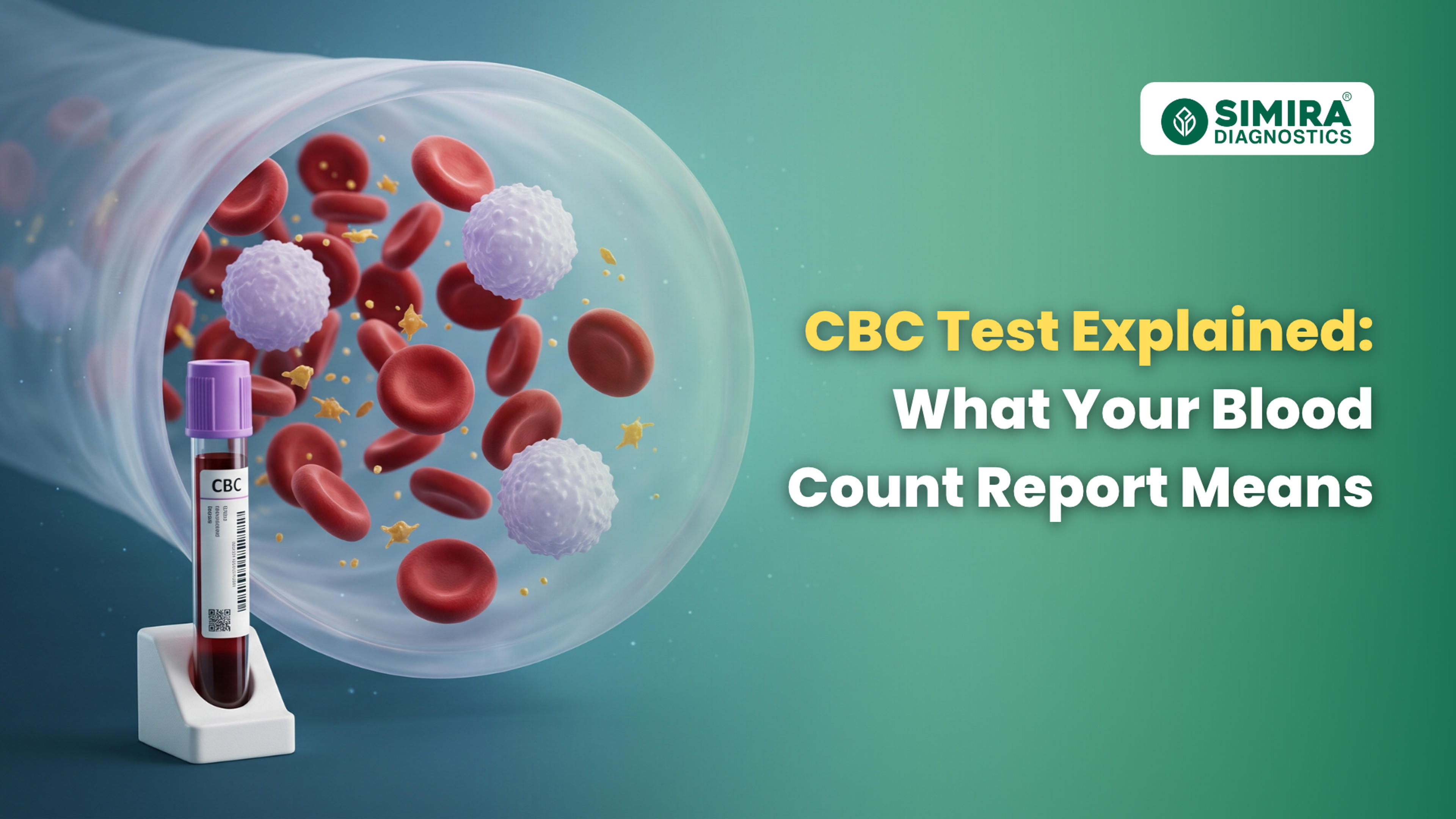
A CBC test is one of the most commonly performed blood investigations. It measures different components of your blood, including red blood cells, white blood cells, haemoglobin and platelets.
But what do these numbers actually mean? Why does haemoglobin matter? What does a high WBC count indicate? And should you be concerned if your platelet count is below the normal range?
Understanding your CBC blood test report can help you become more aware of your health and have informed discussions with your healthcare professional.
In this blog, we explain the CBC test, its components, normal reference ranges and what high or low blood count results may indicate.
1. What Is a CBC Test?
A Complete Blood Count (CBC) test is a blood investigation that measures the number and characteristics of different blood cells circulating in your body.
Blood contains three major types of cells:
- Red Blood Cells (RBCs): Carry oxygen from the lungs to different parts of the body.
- White Blood Cells (WBCs): Help the immune system fight infections and protect the body against harmful organisms.
- Platelets: Help the blood clot and prevent excessive bleeding.
A CBC test evaluates these components along with haemoglobin, haematocrit and other blood cell measurements.
Doctors commonly recommend a CBC test to:
- Evaluate general health during routine check-ups.
- Investigate fatigue, weakness or unexplained tiredness.
- Check for possible anaemia.
- Assess signs of infection or inflammation.
- Investigate unusual bruising or bleeding.
- Monitor certain medical conditions.
- Monitor the effects of specific treatments or medications.
A CBC test provides useful information about your blood health, but it cannot diagnose every condition on its own.
2. What Does a CBC Blood Test Measure?
A CBC report contains several parameters. Each provides different information about your blood cells and their functions.
Let's understand the major components.
A. Haemoglobin (Hb)
Haemoglobin is an iron-containing protein present inside red blood cells. Its primary function is to carry oxygen from the lungs to the body's tissues.
Why is haemoglobin important?
Low haemoglobin levels may indicate anaemia, which can occur due to iron deficiency, vitamin deficiencies, blood loss or certain chronic medical conditions.
Common symptoms associated with low haemoglobin include:
- Fatigue and weakness.
- Dizziness.
- Pale skin.
- Shortness of breath.
- Headaches.
- Reduced ability to perform physical activities.
High haemoglobin levels may occur due to dehydration, smoking, living at high altitudes or certain medical conditions.
B. Red Blood Cell Count (RBC)
Red Blood Cells are responsible for transporting oxygen throughout the body with the help of haemoglobin.
The RBC count measures the number of red blood cells in a specific volume of blood.
What can abnormal RBC levels indicate?
- Low RBC count: May be associated with anaemia, blood loss, nutritional deficiencies or certain chronic illnesses.
- High RBC count: May occur due to dehydration, reduced oxygen availability or conditions that increase red blood cell production.
Doctors generally interpret RBC count alongside haemoglobin, haematocrit and red blood cell indices.
C. White Blood Cell Count (WBC)
White Blood Cells are an essential part of the immune system. They help protect the body against infections and other harmful substances.
The WBC count measures the total number of white blood cells in your blood.
What does a high WBC count mean?
An elevated WBC count, also called leukocytosis, may occur due to:
- Bacterial or viral infections.
- Inflammation.
- Physical stress.
- Certain medications.
- Some blood-related disorders.
What does a low WBC count mean?
A reduced WBC count, known as leukopenia, may be associated with:
- Certain viral infections.
- Bone marrow disorders.
- Autoimmune conditions.
- Nutritional deficiencies.
- Certain medications and treatments.
An abnormal WBC count does not automatically indicate a serious infection. The differential count and clinical findings help doctors interpret the result.
D. Platelet Count
Platelets are small blood components that help form clots when a blood vessel is injured.
The platelet count measures the number of platelets circulating in your bloodstream.
What does a low platelet count mean?
A low platelet count is known as thrombocytopenia.
It may occur due to:
- Certain viral infections, including dengue.
- Immune-related conditions.
- Nutritional deficiencies.
- Bone marrow disorders.
- Certain medications.
Possible symptoms include easy bruising, frequent nosebleeds, bleeding gums or prolonged bleeding.
What does a high platelet count mean?
An elevated platelet count, known as thrombocytosis, may occur due to:
- Infections.
- Inflammation.
- Iron deficiency.
- Blood loss.
- Certain bone marrow disorders.
Platelet results should always be interpreted in the context of symptoms and other blood parameters.
E. Haematocrit (HCT)
Haematocrit measures the percentage of your total blood volume occupied by red blood cells.
For example, if your haematocrit is 40%, it means approximately 40% of your blood volume consists of red blood cells.
- Low HCT: May be associated with anaemia or blood loss.
- High HCT: May occur due to dehydration or increased red blood cell production.
Haematocrit is generally interpreted alongside haemoglobin and RBC count.
3. What Are RBC Indices in a CBC Report?
Apart from measuring the number of red blood cells, a CBC test also evaluates their size and haemoglobin content.
These measurements are known as RBC indices.
They are particularly useful when investigating different types of anaemia.
Mean Corpuscular Volume (MCV)
MCV measures the average size of red blood cells.
- Low MCV: May indicate microcytic anaemia, commonly associated with iron deficiency or thalassaemia.
- High MCV: May occur with vitamin B12 or folate deficiency and certain other conditions.
- Normal MCV: Does not rule out anaemia.
Mean Corpuscular Haemoglobin (MCH)
MCH measures the average amount of haemoglobin present in each red blood cell.
- Low MCH may occur in iron deficiency and some types of microcytic anaemia.
- High MCH may be seen when red blood cells are larger than usual.
Mean Corpuscular Haemoglobin Concentration (MCHC)
MCHC measures the average concentration of haemoglobin inside red blood cells.
Low MCHC may be associated with certain types of anaemia, particularly iron deficiency.
Red Cell Distribution Width (RDW)
RDW measures the variation in the size of red blood cells.
A high RDW means there is greater variation in red blood cell size. It may be observed in iron deficiency, vitamin deficiencies and some mixed forms of anaemia.
Why are RBC indices important?
These parameters help doctors understand the possible type and cause of anaemia rather than relying only on haemoglobin levels.
4. What Is a Differential WBC Count?
A differential WBC count measures the proportion or number of different types of white blood cells.
The five major types include:
| WBC Type | Main Function |
| Neutrophils | Help fight bacterial infections and respond to inflammation. |
| Lymphocytes | Support immune responses, particularly against viruses. |
| Monocytes | Help remove damaged cells and fight infections. |
| Eosinophils | Play a role in allergic reactions and defence against certain parasites. |
| Basophils | Participate in allergic and inflammatory responses. |
What can an abnormal differential count indicate?
- High neutrophils: May occur in bacterial infections, inflammation or physical stress.
- High lymphocytes: May be associated with certain viral infections and other conditions.
- High eosinophils: May occur in allergies, asthma and parasitic infections.
- High monocytes: May be seen in certain infections and inflammatory conditions.
- High basophils: May occur in allergic or inflammatory conditions and some blood disorders.
These patterns are not diagnostic by themselves. Doctors consider the absolute cell counts, percentages, symptoms and other investigations.
5. CBC Test Normal Range: What Are the Typical Values?
CBC reference ranges can vary depending on age, sex, pregnancy status, laboratory methods and other factors.
The following table provides approximate reference ranges commonly used for adults. Always refer to the reference intervals printed on your laboratory report.
| CBC Parameter | Typical Adult Reference Range |
| Haemoglobin (Male) | 13.5–17.5 g/dL |
| Haemoglobin (Female) | 12.0–15.5 g/dL |
| RBC Count (Male) | 4.5–5.9 million/µL |
| RBC Count (Female) | 4.1–5.1 million/µL |
| WBC Count | 4,000–11,000 cells/µL |
| Platelet Count | 150,000–450,000/µL |
| Haematocrit (Male) | 41–53% |
| Haematocrit (Female) | 36–46% |
| MCV | 80–100 fL |
| MCH | 27–33 pg |
| MCHC | 32–36 g/dL |
| RDW | Approximately 11.5–14.5% |
Important: These are illustrative adult ranges, not universal diagnostic cut-offs. Children's reference ranges differ considerably, and pregnancy can also change expected blood counts.
6. What Can an Abnormal CBC Report Indicate?
An abnormal CBC report does not always mean that you have a serious medical condition.
Doctors look at combinations of parameters to understand possible underlying causes.
Here are some common examples:
Low Haemoglobin with Low MCV
This pattern may suggest iron deficiency anaemia or certain inherited blood conditions, such as thalassaemia.
Additional investigations, such as serum ferritin and iron studies, may be recommended.
High WBC Count with Increased Neutrophils
This pattern may be seen in bacterial infections, inflammation and other conditions.
Depending on symptoms, doctors may recommend additional tests such as CRP or Procalcitonin.
Low WBC Count
A reduced white blood cell count may occur during certain viral infections, following specific treatments or due to other medical conditions.
Further evaluation depends on which type of white blood cell is reduced and how significantly.
Low Platelet Count
A reduced platelet count may occur in infections such as dengue, immune-related conditions and other disorders.
If platelet levels are significantly reduced or accompanied by bleeding, medical assessment is important.
High Haemoglobin and Haematocrit
These values may increase due to dehydration or conditions associated with increased red blood cell production.
Doctors may recommend repeat testing or further investigations depending on the findings.
7. Is a CBC Test Useful for Detecting Infections Like Dengue and Malaria?
Yes. A CBC test can provide useful information when evaluating certain infections.
However, it cannot independently confirm dengue, malaria or other specific infectious diseases.
CBC Test and Dengue
During dengue infection, doctors may monitor:
- Platelet count.
- WBC count.
- Haematocrit.
A falling platelet count and rising haematocrit may be important findings in the appropriate clinical context, particularly when assessing possible plasma leakage.
However, platelet reduction alone does not confirm dengue.
Specific investigations such as NS1 antigen or dengue IgM testing may be recommended depending on the stage of illness.
CBC Test and Malaria
Malaria may sometimes be associated with:
- Reduced haemoglobin.
- Reduced platelet count.
- Changes in WBC count.
However, these findings are not specific to malaria.
Diagnosis generally requires specific parasite detection tests, such as malaria antigen testing or microscopy.
CBC Test and Other Infections
CBC can also help doctors evaluate changes in blood cell counts associated with respiratory infections, bacterial infections and other inflammatory conditions.
Additional investigations may be required to identify the specific cause.
A CBC test is a simple blood investigation performed using a blood sample.
The process generally involves:
- A healthcare professional cleans the selected area, usually the arm.
- A sterile needle is used to collect blood from a vein.
- The blood sample is collected in an appropriate laboratory tube.
- The sample is analysed using an automated haematology analyser.
- The laboratory generates a CBC report containing the measured parameters.
The procedure usually takes only a few minutes.
Do You Need to Fast Before a CBC Test?
In most cases, fasting is not required for a CBC test alone.
However, if your doctor has prescribed additional blood investigations along with CBC, fasting may be necessary depending on those tests.
Follow the instructions provided by your healthcare professional or laboratory.
9. When Should You Consider Getting a CBC Test?
Your doctor may recommend a CBC test if you experience:
- Persistent fatigue or weakness.
- Unexplained fever.
- Frequent or recurring infections.
- Unusual bruising or bleeding.
- Pale skin or dizziness.
- Suspected anaemia.
- Symptoms associated with nutritional deficiencies.
- Changes in health that require medical investigation.
A CBC may also be included in routine health check-ups to assess general blood health.
The need and frequency of testing depend on your symptoms, medical history and individual health requirements.
Conclusion
A Complete Blood Count (CBC) test is an important blood investigation that provides valuable information about red blood cells, white blood cells, haemoglobin and platelets.
From identifying possible anaemia to evaluating changes associated with infections, a CBC report helps doctors understand different aspects of your blood health.
However, an abnormal result does not automatically confirm a disease. Haemoglobin, RBC, WBC, platelet count and other parameters should be interpreted together with your symptoms, medical history and additional investigations when necessary.
Understanding your CBC blood test report is a useful step towards becoming more informed about your health. If any parameter is outside the laboratory's reference range, consult a qualified healthcare professional for appropriate interpretation and guidance.
Medical Disclaimer
This article is intended for general educational and awareness purposes only. It is not a substitute for medical diagnosis, treatment or professional medical advice. Health screening recommendations vary according to age, sex, symptoms, medical history, medications, family history and individual risk factors. Please consult a qualified healthcare professional before deciding which tests or screenings are appropriate. Do not start, stop or change medication based solely on information in this article.