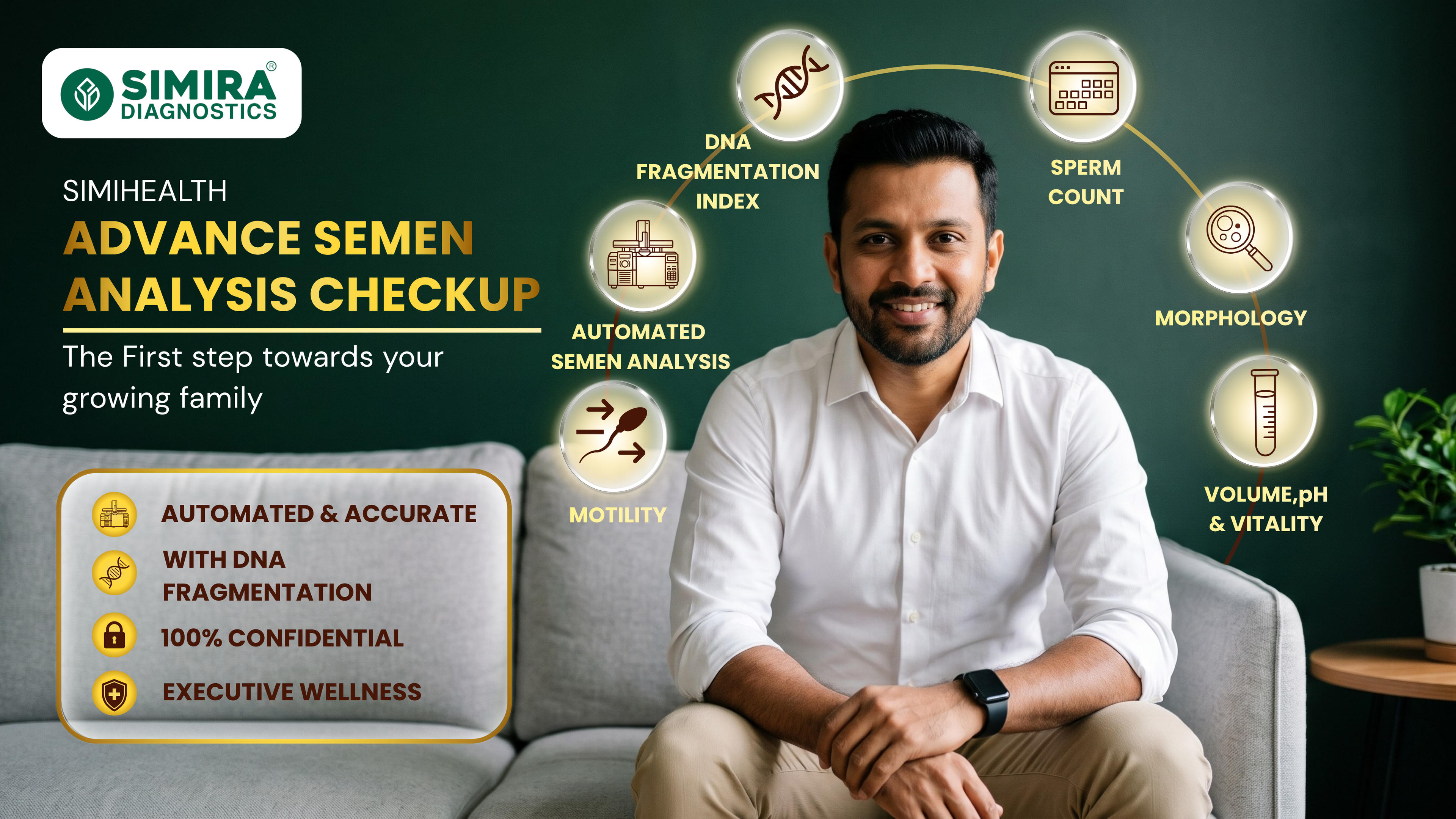
Planning a pregnancy is an important journey for couples, but sometimes conception does not happen as quickly as expected. While fertility discussions often focus on women's reproductive health, male fertility is equally important.
One of the first investigations used to evaluate male reproductive health is a semen analysis test. It examines different characteristics of semen and sperm, including sperm count, motility, morphology, and other parameters that may influence fertility.
Whether you are planning a pregnancy, experiencing difficulty conceiving, or simply want to understand male reproductive health, knowing how semen analysis works can help you make informed decisions.
In this complete guide, we will explain what a semen analysis test is, who may need it, how to prepare, what the report measures, and how to understand the results.
What is a Semen Analysis Test?
A semen analysis is a laboratory investigation that examines a semen sample to evaluate sperm health and certain characteristics of the seminal fluid.
It is commonly recommended as an initial investigation when assessing male fertility.
The test evaluates several important parameters, including:
- Sperm concentration: Number of sperm present per millilitre of semen.
- Total sperm count: Total number of sperm in the entire ejaculate.
- Sperm motility: How effectively sperm move.
- Sperm morphology: The size and shape of sperm.
- Semen volume: Amount of semen produced during ejaculation.
- Sperm vitality: Percentage of live sperm, when assessed.
These parameters help healthcare professionals identify abnormalities that may be associated with difficulties in conception.
However, a semen analysis alone cannot confirm whether a man is fertile or infertile. Results must be interpreted alongside medical history, physical examination, and the reproductive health of both partners.
Why is Semen Analysis important for Men and Couples?
Male reproductive factors contribute to approximately half of infertility cases, either independently or together with female factors.
A semen analysis provides useful information about sperm production and semen characteristics, helping doctors decide whether further evaluation is necessary.
The test may help:
- Identify low sperm concentration or a low total sperm count.
- Evaluate sperm movement and morphology.
- Identify abnormalities in semen characteristics.
- Support the investigation of male-factor infertility.
- Monitor reproductive health following certain medical treatments.
- Provide baseline information during fertility evaluation.
For couples: Fertility evaluation should consider both partners rather than focusing exclusively on one person. Early assessment can help identify possible contributing factors and guide appropriate treatment discussions.
Who Should Consider a Semen Analysis Test?
A healthcare professional may recommend semen analysis in several situations.
1. Couples Planning a Pregnancy
Men whose partners are planning a pregnancy may discuss reproductive health with their healthcare provider, particularly if there are known medical or reproductive risk factors.
A semen analysis is not necessarily required as a routine screening test for every healthy man.
2. Couples Experiencing Difficulty Conceiving
If a couple has been trying to conceive without success, semen analysis is commonly included in the initial fertility evaluation.
General recommendations suggest considering an infertility evaluation:
- After 12 months of regular unprotected intercourse when the female partner is under 35.
- After 6 months when the female partner is 35 or older.
- Earlier when either partner has known reproductive health concerns or other significant risk factors.
3. Men With a History of Reproductive Health Problems
Testing may be considered for men with a history of:
- Undescended testes.
- Testicular injury or surgery.
- Varicocele.
- Certain reproductive tract infections.
- Hormonal disorders.
- Previous chemotherapy or radiation treatment.
- Other conditions that may affect sperm production.
4. Men Undergoing Fertility Treatment
Semen analysis may be recommended as part of fertility investigations before treatments such as intrauterine insemination (IUI) or in vitro fertilisation (IVF).
It may also be used to assess changes in semen parameters during or after certain treatments.
What Does a Semen Analysis Test Measure?
A semen analysis examines multiple parameters. Understanding each one can help you read your report more confidently.
1. Semen Volume
Semen volume refers to the amount of fluid released during ejaculation.
Lower-than-expected semen volume may sometimes be associated with incomplete sample collection, hormonal conditions, ejaculatory problems, or reproductive tract issues.
2. Sperm Concentration
Sperm concentration measures the number of sperm present in one millilitre of semen.
A lower concentration may indicate oligozoospermia, a condition characterised by a lower-than-expected sperm concentration.
3. Total Sperm Count
Total sperm count measures the overall number of sperm in the entire semen sample.
It is different from sperm concentration because it also considers the total semen volume.
4. Sperm Motility
Motility refers to the ability of sperm to move.
Sperm motility is generally assessed in different categories:
- Progressive motility: Sperm move forward, either rapidly or slowly.
- Non-progressive motility: Sperm move but do not travel forward effectively.
- Immotile sperm: Sperm show no movement.
Good sperm movement is important because sperm need to travel through the female reproductive tract to reach the egg.
5. Sperm Morphology
Morphology evaluates the size and shape of sperm.
A sperm cell generally has three main parts:
Abnormalities in these structures may be associated with reduced reproductive potential. However, morphology should not be interpreted independently because men with a low percentage of normal forms may still achieve natural conception.
6. Sperm Vitality
Sperm vitality measures the percentage of live sperm in a semen sample.
It can be particularly useful when a high proportion of sperm are immotile, helping distinguish between live but non-moving sperm and dead sperm.
7. Semen pH
Semen pH measures the acidity or alkalinity of the sample.
Abnormal pH values may sometimes provide clues about reproductive tract conditions and require interpretation alongside other findings.
Normal Semen Analysis Values: What Do They Mean?
The World Health Organization's sixth edition Laboratory Manual for the Examination and Processing of Human Semen (2021) provides lower fifth-centile reference values based on men whose partners conceived within a specified period.
Some commonly referenced values include:
| Semen parameter | WHO 2021 lower reference value |
| Semen volume | 1.4 mL |
| Sperm concentration | 16 million/mL |
| Total sperm number | 39 million per ejaculate |
| Total sperm motility | 42% |
| Progressive motility | 30% |
| Sperm vitality | 54% |
| Normal sperm morphology | 4% |
Important: These values are reference limits, not strict boundaries between fertile and infertile men. A result below a reference value does not automatically mean pregnancy is impossible, and a result above the values does not guarantee fertility.
Always refer to the laboratory's stated reference ranges and consult a qualified healthcare professional for interpretation.
How to Prepare for a Semen Analysis Test
Proper preparation and sample collection are important for obtaining a reliable semen analysis report.
Follow these general guidelines:
1. Maintain the Recommended Abstinence Period
Most laboratories recommend avoiding ejaculation for 2–7 days before semen collection.
This includes sexual intercourse and masturbation.
The abstinence period should follow the laboratory's specific instructions because it can influence semen volume and sperm parameters.
2. Use the Sterile Collection Container
Collect the semen sample in the sterile container provided by the laboratory.
Avoid using ordinary household containers, as they may contaminate the sample.
3. Collect the Complete Sample
It is important to collect the entire ejaculate.
If any portion of the sample is lost during collection, inform the laboratory because this may affect the interpretation of the results.
4. Avoid Ordinary Lubricants
Some lubricants and ordinary condoms can interfere with sperm movement or affect sample quality.
Follow the laboratory's instructions regarding acceptable collection methods.
5. Follow Sample Transportation Instructions
If the sample is collected outside the laboratory, follow the laboratory's instructions regarding delivery time and temperature.
Semen samples are generally required to reach the laboratory promptly, often within one hour of collection.
6. Inform the Doctor About Medicines and Health Conditions
Tell your doctor about:
- Current medications.
- Recent fever or illness.
- Hormonal treatments.
- Previous reproductive surgeries.
- Medical conditions affecting reproductive health.
Some health conditions and treatments may influence sperm parameters.
The procedure is generally straightforward and involves the following steps:
- The laboratory provides a sterile sample collection container.
- The sample is collected according to the laboratory's instructions, usually through masturbation.
- The complete sample is submitted for laboratory examination.
- Laboratory professionals assess semen characteristics and sperm parameters.
- The findings are recorded in a semen analysis report.
The sample is examined using appropriate laboratory methods to evaluate sperm concentration, motility, morphology, and other relevant characteristics.
Understanding Abnormal Semen Analysis Results
An abnormal semen analysis result does not necessarily mean that natural conception is impossible.
Some common terms used in semen analysis reports include:
| Medical term | Meaning |
| Oligozoospermia | Lower-than-expected sperm concentration |
| Asthenozoospermia | Reduced sperm motility |
| Teratozoospermia | Higher proportion of abnormally shaped sperm |
| Azoospermia | No sperm detected in the ejaculate |
| Necrozoospermia | High proportion of dead sperm |
| Hypospermia | Lower-than-expected semen volume |
These findings may have different underlying causes.
A healthcare professional may recommend further investigations, such as hormonal testing, physical examination, genetic evaluation, or imaging, depending on the report and medical history.
Why Might a Repeat Semen Analysis Be Needed?
Semen parameters can vary naturally between samples.
Factors such as recent fever, illness, abstinence duration, incomplete sample collection, and other health conditions may influence results.
If an abnormality is identified, a doctor may recommend repeating the test to confirm the findings. The timing depends on the degree of abnormality and the clinical situation.
What is the difference between Semen Analysis and Sperm DNA Fragmentation Testing?
Both investigations provide information about male reproductive health, but they evaluate different aspects of sperm.
| Feature | Semen Analysis | Sperm DNA Fragmentation Test |
| Main purpose | Evaluates semen and sperm characteristics | Evaluates damage to sperm DNA |
| Sperm count | Assessed | Not the main measurement |
| Sperm motility | Assessed | Not the main measurement |
| Sperm morphology | Assessed | Not the main measurement |
| DNA integrity | Not directly measured | Specifically evaluated |
| Clinical use | Common initial fertility investigation | Considered in selected clinical situations |
What is Sperm DNA Fragmentation?
Sperm DNA fragmentation refers to damage or breaks in the genetic material inside sperm cells.
Increased sperm DNA fragmentation has been associated with certain reproductive difficulties in some studies. However, the relationship varies, and the result does not independently determine whether conception will occur.
A fertility specialist may consider this test in selected situations, such as recurrent pregnancy loss, unexplained infertility, or certain cases of unsuccessful assisted reproductive treatment.
It is not recommended as a routine first-line test for every man.
Lifestyle Factors That May Influence Sperm Health
Lifestyle habits can influence overall reproductive health. Although lifestyle improvements cannot guarantee conception, they may help reduce certain risk factors.
1. Maintain a Balanced Diet
Include a variety of fruits, vegetables, whole grains, protein sources, nuts, and seeds.
A balanced diet supports general health and provides nutrients needed for normal body functions.
2. Exercise Regularly
Regular physical activity supports cardiovascular and metabolic health. Maintaining a healthy weight may also support hormonal balance.
3. Avoid Smoking and Tobacco
Smoking is associated with poorer sperm parameters and increased oxidative stress. Avoiding tobacco can support overall reproductive health.
4. Limit Excessive Alcohol Consumption
Heavy alcohol consumption may affect hormonal balance and reproductive function. Reducing alcohol intake is a sensible health measure.
5. Get Adequate Sleep
Consistent, adequate sleep supports overall physical and hormonal health.
6. Avoid Anabolic Steroids and Unsupervised Testosterone Use
External testosterone and anabolic steroids can suppress the body's natural sperm production and may significantly affect fertility.
Men planning to conceive should discuss testosterone treatment with a qualified healthcare professional.
7. Manage Existing Health Conditions
Conditions such as diabetes, hormonal disorders, and reproductive tract infections may influence male reproductive health. Appropriate medical care is important.
Conclusion
Semen analysis is an important investigation for understanding male reproductive health and evaluating potential fertility concerns. By examining sperm count, motility, morphology, semen volume, and other parameters, the test provides useful information that can guide further medical evaluation.
For couples planning a pregnancy or experiencing difficulty conceiving, understanding both partners' reproductive health is essential. An abnormal result does not automatically mean infertility, just as a normal report does not guarantee conception.
Being informed about semen analysis, following the correct sample collection instructions, and discussing results with a qualified healthcare professional can help men and couples make confident, informed decisions about their reproductive health.
Medical Disclaimer
Disclaimer: This article is intended for general educational and awareness purposes only. It is not a substitute for medical diagnosis, treatment or professional medical advice. Health screening recommendations vary according to age, sex, symptoms, medical history, medications, family history and individual risk factors. Please consult a qualified healthcare professional before deciding which tests or screenings are appropriate. Do not start, stop or change medication based solely on information in this article.