Introduction
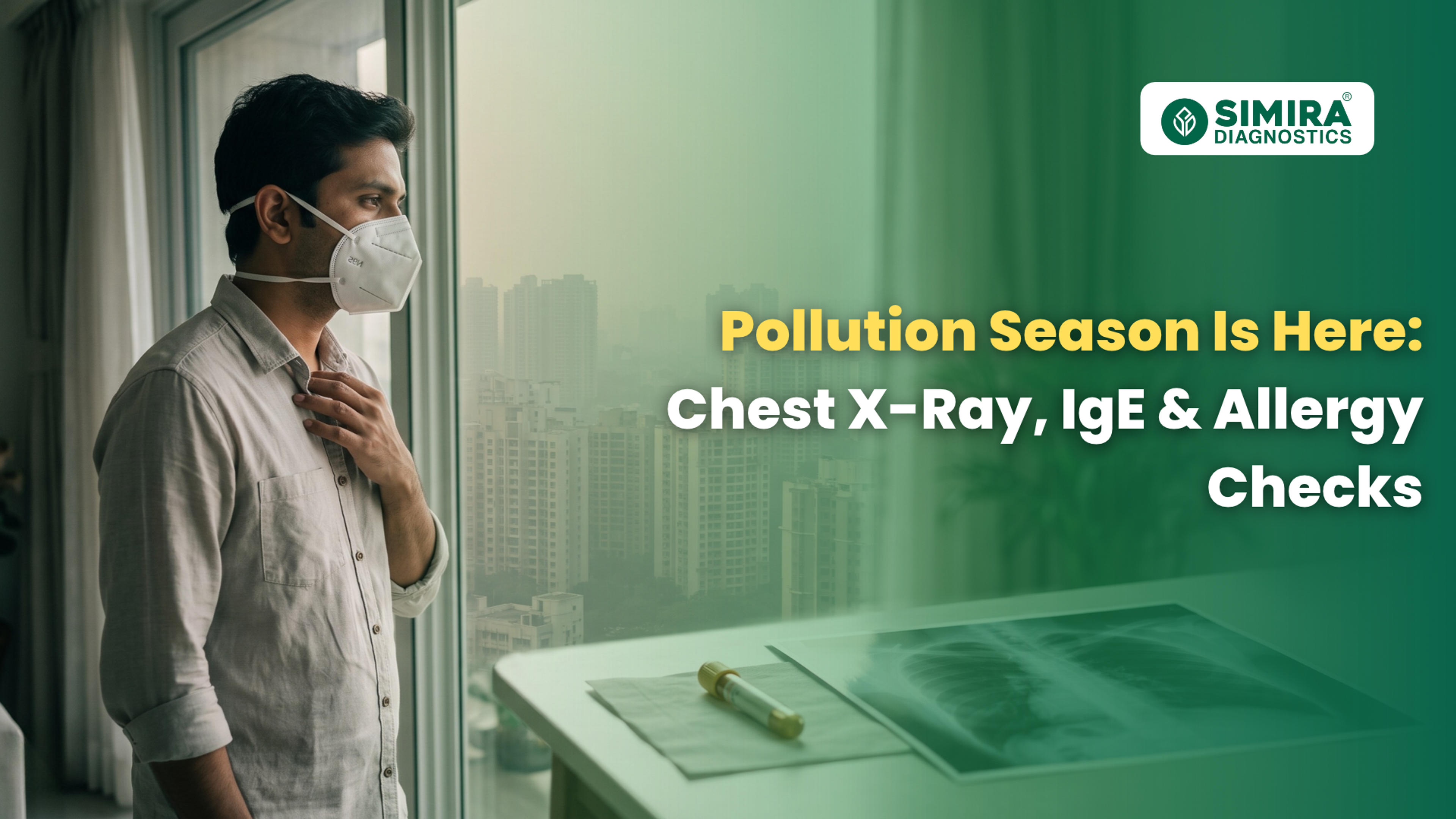
Air pollution is becoming a growing concern, especially during periods of poor air quality, smog, dust exposure, and seasonal weather changes. From persistent coughing and sneezing to wheezing, chest tightness, and breathlessness, polluted air can irritate the respiratory system and worsen existing conditions such as asthma and allergic rhinitis.
If you are experiencing frequent respiratory symptoms, you may wonder: Do you need a chest X-ray, an IgE blood test, or an allergy test?
The right investigation depends on your symptoms, medical history, and exposure to pollutants. A chest X-ray may help doctors investigate certain lung conditions, while an IgE blood test and specific allergy tests can help evaluate suspected allergic reactions. However, no single test can detect every pollution-related health problem.
In this blog, we explain the difference between these tests, when they may be recommended, and how timely medical evaluation can help you protect your respiratory health during pollution season.
How Does Air Pollution Affect Your Lungs?
Air pollution contains harmful particles and gases, including particulate matter (PM2.5 and PM10), nitrogen dioxide, ozone, and other irritants. Fine particulate matter can travel deep into the respiratory tract and may contribute to inflammation.
Common sources of air pollution include:
- Vehicle exhaust and traffic emissions
- Construction dust and road dust
- Industrial emissions
- Smoke from burning waste, wood, or other fuels
- Tobacco smoke and indoor air pollutants
- Seasonal smog and poor outdoor air quality
Common symptoms of pollution exposure
Watch for these symptoms, particularly when air quality is poor:
- Persistent cough or throat irritation
- Sneezing, runny nose, or nasal congestion
- Wheezing or difficulty breathing
- Chest tightness or discomfort
- Burning or watery eyes
- Increased asthma symptoms
- Shortness of breath during physical activity
Pollution can irritate the airways even in people without a diagnosed respiratory condition. It can also worsen asthma, allergies, and other existing lung diseases.
Important: These symptoms can have several causes. If they persist, recur frequently, or become worse, consult a healthcare professional instead of assuming pollution is the only reason.
1. Chest X-Ray: When Is It Needed During Pollution Season?
A chest X-ray is an imaging test that creates pictures of the lungs, heart, and surrounding structures. Doctors may recommend it when respiratory symptoms suggest a condition that requires further investigation.
When might a chest X-ray be recommended?
A doctor may consider a chest X-ray if you have:
- A persistent or unexplained cough
- Significant or worsening breathlessness
- Chest symptoms that require evaluation for pneumonia or another lung condition
- Fever with respiratory symptoms when a lung infection is suspected
- Coughing up blood
- Suspected complications of an existing respiratory condition
A chest X-ray can help identify certain abnormalities, such as some lung infections, fluid around the lungs, or other visible changes.
Can a chest X-ray detect pollution damage?
Not every effect of air pollution is visible on a chest X-ray. Airway irritation, allergies, and early or mild respiratory problems may occur even when the X-ray appears normal.
A chest X-ray is therefore not a routine screening test for everyone exposed to air pollution. Your doctor will decide whether imaging is appropriate based on your symptoms and examination.
Is a chest X-ray safe?
A chest X-ray uses a small amount of ionising radiation. It is generally considered a low-radiation examination when medically indicated. Inform your healthcare provider if you are pregnant or may be pregnant before the examination.
2. Total IgE Blood Test: What Does It Reveal?
Immunoglobulin E (IgE) is an antibody involved in allergic reactions. The Total IgE blood test measures the overall level of IgE in your blood.
Doctors may recommend this test when evaluating symptoms that suggest an allergic condition.
When might a Total IgE test be useful?
A doctor may consider Total IgE testing if you experience:
- Recurrent sneezing and nasal congestion
- Persistent itching or skin rashes
- Suspected allergic asthma
- Repeated allergy-related symptoms
- Other symptoms that require an allergy evaluation
What does a high IgE level mean?
An elevated Total IgE level may be associated with allergic conditions, including allergic asthma, eczema, or allergic rhinitis. However, it can also be elevated for other reasons.
A high result does not automatically confirm an allergy, identify the substance causing it, or prove that air pollution is responsible for your symptoms.
Similarly, a normal Total IgE result does not rule out every allergic condition.
Key takeaway: Total IgE is one part of an allergy assessment. Your symptoms, medical history, and other investigations help determine what the result means.
3. Allergy Testing: How Can You Identify Your Triggers?
If your symptoms include repeated sneezing, itchy eyes, a runny nose, wheezing, or skin reactions, your doctor may recommend a more targeted allergy evaluation.
Unlike Total IgE testing, which measures overall IgE levels, specific IgE testing checks for IgE antibodies against particular allergens.
Depending on your symptoms and exposure, possible allergens may include:
- House dust mites
- Pollen
- Mould
- Animal dander
- Certain other environmental allergens
Total IgE vs Specific IgE: What Is the Difference?
| Feature | Total IgE Test | Specific IgE Test |
| What it measures | Overall IgE level in blood | IgE antibodies against a particular allergen |
| Main purpose | Supports evaluation of suspected allergic conditions | Helps investigate sensitisation to specific allergens |
| Identifies a particular trigger? | No | Can help identify a suspected allergen |
| Confirms a clinical allergy by itself? | No | No; results must match symptoms and clinical history |
Your doctor may also recommend a skin prick test or other investigations depending on your symptoms.
Remember: Air pollution itself is not necessarily an allergen. It can irritate the airways and may aggravate symptoms in people with existing allergies or asthma. Allergy testing is designed to investigate suspected allergic sensitisation, not to measure the overall effect of pollution on your lungs.
4. Chest X-Ray vs IgE Test vs Allergy Test: Which One Do You Need?
These tests serve different purposes. The right choice depends on the symptoms and the medical question being investigated.
| Test | What it helps evaluate | When it may be considered |
| Chest X-ray | Visible abnormalities in the chest and lungs | Selected cases of persistent cough, breathlessness, suspected infection, or other concerning symptoms |
| Total IgE blood test | Overall IgE antibody level | Evaluation of suspected allergic conditions in an appropriate clinical context |
| Specific IgE blood test | Sensitisation to selected allergens | Suspected allergies where identifying a possible trigger may help management |
| Spirometry or lung function testing | How well air moves in and out of the lungs | Suspected asthma or other airflow-related problems, when clinically appropriate |
No single test is suitable for every person experiencing pollution-related symptoms. Some people may not need any of these tests, while others may require additional assessment.
Your doctor can determine the most appropriate investigation based on your symptoms, examination, and medical history.
Although air pollution can affect anyone, certain groups may be more vulnerable to its effects.
Children
Children's developing respiratory systems can be affected by polluted air. Watch for persistent coughing, wheezing, or difficulty breathing, and seek medical advice when necessary.
Older adults
Older adults, particularly those with existing heart or lung conditions, may be more susceptible to complications associated with poor air quality.
People with asthma or allergies
Pollution can trigger or worsen symptoms in some people with asthma and allergic rhinitis. Follow your prescribed treatment plan and discuss worsening symptoms with your doctor.
People with existing heart or lung conditions
People living with chronic obstructive pulmonary disease (COPD), cardiovascular disease, or other long-term conditions may need additional precautions during periods of poor air quality.
People exposed to dust or fumes at work
Construction workers, traffic personnel, industrial workers, and others exposed to dust or fumes may benefit from appropriate workplace protective measures and medical evaluation when symptoms develop.
6. How Can You Protect Your Respiratory Health During Pollution Season?
Along with seeking medical advice when needed, simple precautions may help reduce your exposure to polluted air.
- Check the Air Quality Index (AQI): Monitor local air quality updates and limit strenuous outdoor activity when pollution levels are high.
- Reduce outdoor exposure: Avoid exercising near busy roads or heavily polluted areas during periods of poor air quality.
- Use a well-fitting N95 respirator when appropriate: It can reduce exposure to airborne particles when properly fitted, but it does not protect against every harmful gas.
- Improve indoor air quality: Avoid indoor smoking, reduce dust accumulation, and use suitable ventilation or air filtration where practical.
- Follow your asthma action plan: If you have asthma, use prescribed medication as directed and keep your reliever medication available according to your doctor's advice.
- Avoid self-medication: Do not start antibiotics, steroids, inhalers, or allergy medication without appropriate medical guidance.
- Seek medical advice for persistent symptoms: A recurring cough, wheezing, or breathlessness should not be ignored.
These measures can help reduce exposure, but they do not eliminate every risk associated with air pollution.
7. When Should You Seek Medical Attention?
Do not delay medical assessment if you experience persistent respiratory symptoms, repeated wheezing, a cough that is not improving, or worsening symptoms despite following your usual treatment.
Seek emergency medical care immediately if you experience severe breathlessness, difficulty speaking because of breathing problems, blue or grey lips, confusion, fainting, or severe chest pain.
A normal chest X-ray or a normal IgE result should not be used to dismiss serious symptoms. Medical assessment is important even when an initial test result is reassuring.
Conclusion: Don't Ignore Your Respiratory Symptoms This Pollution Season
Pollution season is a timely reminder to take respiratory health seriously. Persistent coughing, wheezing, sneezing, or breathlessness may need medical evaluation, especially if symptoms are recurring or getting worse.
A chest X-ray can help investigate selected lung conditions, while Total IgE and specific IgE tests may support the evaluation of suspected allergies. The most suitable investigation depends on your symptoms and your doctor's assessment.
At Simira Diagnostics, you can enquire about available diagnostic services and testing requirements to help you take an informed approach to your health.
Breathe easier by staying informed, reducing pollution exposure, and seeking timely medical advice when symptoms arise.
Medical Disclaimer
Disclaimer: This article is intended for general educational and awareness purposes only. It is not a substitute for medical diagnosis, treatment or professional medical advice. Health screening recommendations vary according to age, sex, symptoms, medical history, medications, family history and individual risk factors. Please consult a qualified healthcare professional before deciding which tests or screenings are appropriate. Do not start, stop or change medication based solely on information in this article.