Introduction
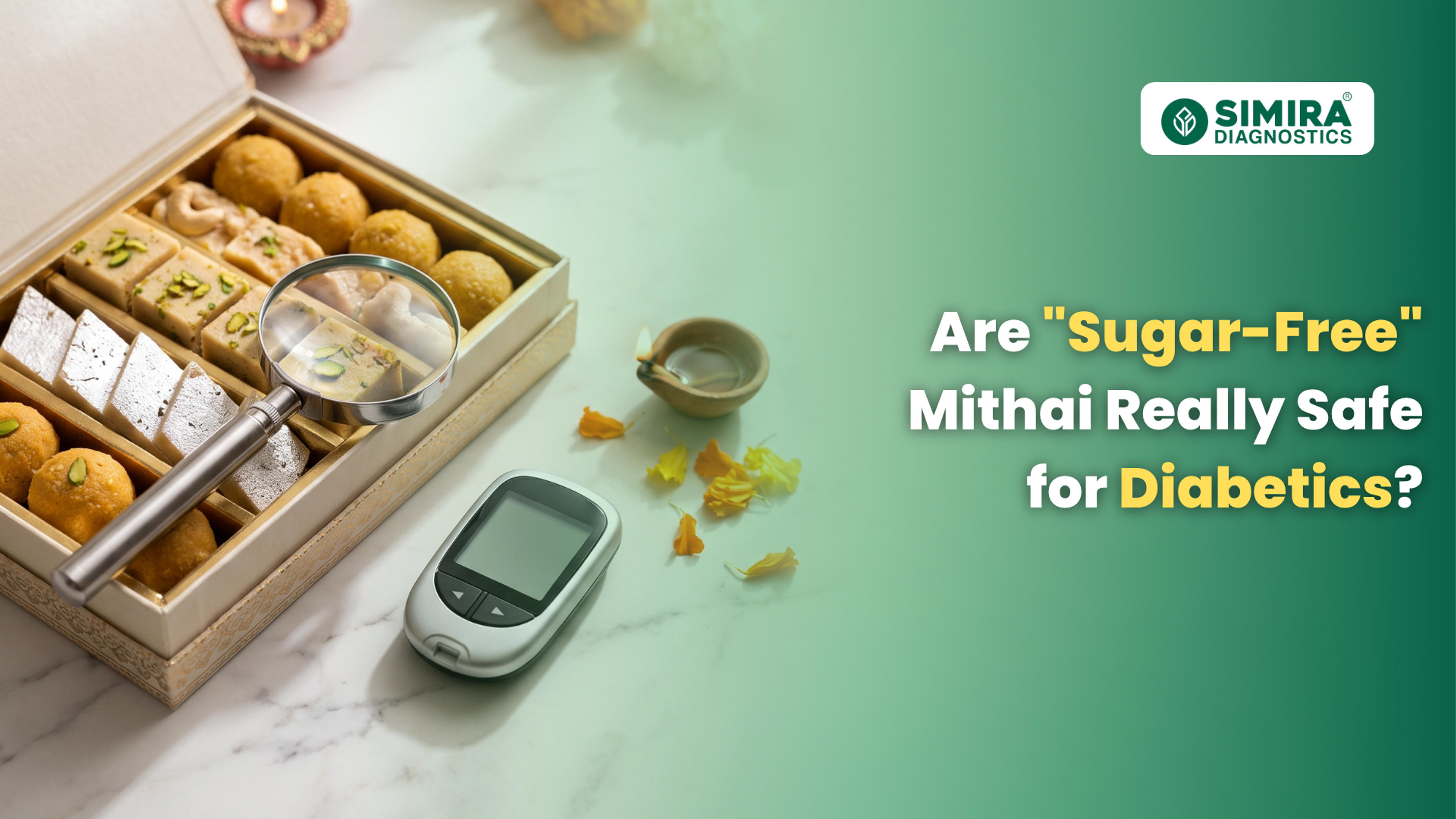
Indian festivals and celebrations are incomplete without mithai. From kaju katli and rasgulla to gulab jamun, peda and laddoo, sweets are an important part of our food culture. But for people living with diabetes, enjoying these traditional treats often comes with one important question: Can I eat sweets without affecting my blood sugar?
With the growing popularity of sugar-free mithai, many people believe that choosing sweets labelled "sugar-free" automatically makes them safe for diabetes. But is that really true?
The answer is not as simple as it seems.
Although sugar-free mithai may contain less or no conventional sugar, it can still contain carbohydrates, calories and ingredients that influence blood glucose levels. Understanding what goes into these sweets, how sugar substitutes work and how to read nutrition labels can help people with diabetes make more informed choices.
Let's understand whether sugar-free mithai is genuinely a better option and what precautions to take before enjoying festive sweets.
1. What Does "Sugar-Free" Actually Mean?
The term "sugar-free" generally indicates that a product contains no or only a very small amount of sugars according to the applicable food-labelling standards.
However, it does not necessarily mean:
- Zero carbohydrates
- Zero calories
- No effect on blood glucose
- Low fat
- Suitable for unlimited consumption
For example, a sugar-free kaju katli may use a sugar substitute instead of regular sugar, but cashews still contain carbohydrates and calories.
Similarly, sugar-free peda may contain milk solids or khoya, which contribute carbohydrates, fat and calories.
The important point: Sugar-free does not mean carbohydrate-free. People with diabetes should consider the total carbohydrate content and portion size rather than relying only on the front-of-pack label.
2. What Ingredients Are Used in Sugar-Free Mithai?
Sugar-free mithai is commonly prepared using alternative sweeteners instead of conventional sugar. However, the ingredients and their nutritional effects can differ from one product to another.
Here are some commonly used sweeteners:
A. Stevia
Stevia-based sweeteners are derived from compounds called steviol glycosides, obtained from the stevia plant.
- They provide sweetness with little or no calories.
- They generally have little direct effect on blood glucose when used in suitable amounts.
- They can be used in certain sweets and desserts.
However, the complete mithai recipe still matters. Ingredients such as flour, milk solids and nuts contribute carbohydrates and calories.
B. Sucralose
Sucralose is a low-calorie sweetener used in various food products.
- It provides sweetness without the same carbohydrate contribution as regular sugar.
- It generally has little direct effect on blood glucose.
- It may be used in selected sugar-free dessert preparations.
Its presence does not automatically make the entire dessert low in carbohydrates.
C. Erythritol
Erythritol belongs to a group of sweeteners known as sugar alcohols or polyols.
- It is absorbed differently from regular sugar.
- It generally has a minimal effect on blood glucose.
- It contributes fewer calories than conventional sugar.
However, consuming large amounts of some sugar alcohols may cause digestive discomfort, including bloating or diarrhoea.
D. Maltitol and Sorbitol
Maltitol and sorbitol are other sugar alcohols that may be used in sugar-free confectionery and desserts.
- They generally provide fewer calories than regular sugar.
- Their effect on blood glucose varies.
- Maltitol, in particular, can still raise blood glucose and should not be treated as equivalent to a zero-carbohydrate sweetener.
- Excessive consumption may cause gas, bloating or diarrhoea.
Remember: Different sweeteners have different effects. Always check the ingredients and nutritional information instead of assuming every sugar substitute behaves the same way.
3. Can Sugar-Free Mithai Still Increase Blood Sugar?
Yes. Sugar-free mithai can still influence blood glucose levels.
The reason is that sugar is not the only source of carbohydrates in sweets.
Consider some common Indian mithai ingredients:
| Ingredient | Why it matters for diabetes |
| Khoya (milk solids) | Contains lactose and contributes carbohydrates and calories |
| Milk | Contains natural milk sugar called lactose |
| Besan | Contains carbohydrates, even though it also provides protein and fibre |
| Cashews and almonds | Provide healthy fats and nutrients but also contain carbohydrates and calories |
| Dates | Contain naturally occurring sugars and carbohydrates |
| Coconut | Provides fat and fibre, but also contributes calories and some carbohydrates |
| Refined flour | Contains starch that is digested into glucose |
| Jaggery | Is still a source of sugar and can raise blood glucose |
Therefore, replacing regular sugar with a substitute does not necessarily remove the other carbohydrate sources from a mithai recipe.
The overall nutritional composition, serving size and individual response all matter.
4. Sugar-Free vs Regular Mithai: Which Is Better?
Sugar-free mithai may be a better option in certain situations, particularly when conventional sugar is replaced with a suitable low-calorie sweetener and the overall carbohydrate content is lower.
However, the difference depends on the recipe.
| Factor | Regular mithai | Sugar-free mithai |
| Sweetening ingredient | Usually regular sugar or sugar syrup | Alternative sweetener |
| Added sugar | Usually present | May be absent or reduced |
| Carbohydrates | Depend on all ingredients | May still contain substantial carbohydrates |
| Calories | Depend on ingredients and portion | May be lower, but not always |
| Blood glucose impact | Can raise blood glucose | Depends on the sweetener and remaining ingredients |
| Portion control | Important | Equally important |
Which should you choose?
Compare the total carbohydrates, calories, serving size and ingredients of both products. A sugar-free product is not automatically the better choice if its total carbohydrate content is similar to that of regular mithai.
5. Popular Indian Mithai: What Should People With Diabetes Know?
Traditional Indian sweets contain different combinations of sugar, milk solids, flour, nuts and fats. Their nutritional composition varies significantly depending on the recipe.
Here are some common examples:
Kaju Katli
Kaju katli is primarily prepared using cashews and sugar. Even when sugar is replaced with a sweetener, cashews contribute carbohydrates and calories.
What to consider: Check the total carbohydrates per serving and avoid assuming that a nut-based sweet is carbohydrate-free.
Besan Laddoo
Besan laddoo is generally made using gram flour, ghee and sugar. Besan contains carbohydrates, while ghee contributes substantial calories and fat.
What to consider: A sugar-free version may still be energy-dense and contain carbohydrates from besan.
Peda
Peda is commonly prepared using khoya or milk solids, sugar and sometimes flavouring ingredients.
What to consider: Milk solids naturally contain lactose, so removing added sugar does not make peda carbohydrate-free.
Gulab Jamun
Traditional gulab jamun is prepared using milk solids or a flour-based mixture, deep-fried and soaked in sugar syrup.
What to consider: Both the sweet base and syrup contribute carbohydrates. Even a sugar-free version may contain starch and calories.
Dry Fruit Laddoo
Dry fruit laddoos often contain dates, raisins, figs, cashews and almonds.
What to consider: Although these ingredients provide nutrients, dates and dried fruits contain concentrated natural sugars and carbohydrates. Natural sweetness does not mean unlimited consumption is appropriate.
6. How to Read the Nutrition Label Before Buying Sugar-Free Mithai
One of the most useful habits for people with diabetes is learning to read food labels.
Instead of focusing only on the words "sugar-free" or "diabetic-friendly", check the following:
1. Total carbohydrates
This is particularly important because carbohydrates from starches and other ingredients can influence blood glucose.
2. Total sugars
Check the amount of sugar per serving. Remember that total sugars may include naturally occurring sugars as well as added sugars.
3. Added sugars
Look for ingredients such as sucrose, glucose syrup, dextrose, fructose, honey and jaggery.
4. Sugar alcohols
Check whether the product contains maltitol, sorbitol, xylitol or other polyols. Their blood glucose effects differ.
5. Serving size
A nutrition label may show values for 100 grams or a smaller serving. Calculate how much you would actually consume.
6. Calories and saturated fat
Sugar-free sweets can still be high in calories and saturated fat, depending on the amount of ghee, cream, milk solids and nuts used.
A simple example
Imagine two mithai products:
| Nutritional information | Mithai A | Mithai B |
| Added sugar | 0 g | 8 g |
| Total carbohydrates | 24 g | 22 g |
| Calories | 180 kcal | 160 kcal |
In this example, Mithai A is labelled sugar-free, but it contains more total carbohydrates and calories than Mithai B.
This illustrates why the sugar-free label alone is not enough to make a decision.
These figures are illustrative only and are not the nutritional values of actual products.
7. Practical Tips for Enjoying Mithai During Festivals
People with diabetes do not necessarily have to avoid every sweet. With planning, portion awareness and individualised dietary guidance, an occasional dessert may fit into a diabetes meal plan.
Here are some practical precautions:
1. Pay attention to portion size
Choose a small portion rather than eating multiple sweets. Even sugar-free desserts can contribute significant carbohydrates and calories.
2. Check the ingredients
Choose products with transparent ingredient lists and nutrition information. Do not rely only on marketing claims.
3. Include sweets in your overall carbohydrate plan
If you count carbohydrates, account for the carbohydrates in the dessert as part of your meal plan. Avoid simply adding sweets on top of your usual carbohydrate intake.
4. Avoid combining multiple sweet dishes
Eating mithai along with sweetened beverages, desserts and other high-carbohydrate festive foods can increase the overall carbohydrate load.
5. Avoid skipping meals to compensate
Do not skip regular meals or change prescribed medication to make room for sweets. Follow your healthcare professional's advice.
6. Monitor your blood glucose as advised
If your healthcare professional has recommended glucose monitoring, follow your usual monitoring plan. Your individual response to foods can provide useful information.
7. Stay physically active
Regular physical activity supports diabetes management. A gentle walk after a meal may be appropriate for many people, depending on their health and mobility.
8. Seek individual dietary advice
People taking insulin or certain diabetes medicines may need specific guidance about carbohydrate intake and medication timing. A qualified dietitian or healthcare professional can help personalise a meal plan.
8. Are Sugar Substitutes Safe for People With Diabetes?
Approved sugar substitutes can be used as alternatives to conventional sugar when consumed within their established acceptable intake limits.
However, a few points are important:
- Not every sweetener has the same effect on blood glucose.
- Some sugar alcohols may cause digestive discomfort when consumed in large amounts.
- Sugar substitutes do not make an otherwise carbohydrate-rich dessert suitable for unlimited consumption.
- Replacing sugar with a sweetener does not automatically make a product nutritious.
- Sweeteners should not replace a balanced eating pattern.
The American Diabetes Association's 2026 Standards of Care notes that non-nutritive sweeteners may be used in moderation and for the short term as a replacement for sugar-sweetened products to reduce overall calorie and carbohydrate intake.
The focus should remain on a balanced diet, appropriate portions and individual diabetes management.
9. Which Is More Important: Sugar Content or Total Carbohydrates?
Both matter, but looking only at sugar content can give an incomplete picture.
Carbohydrates include:
- Sugars
- Starches
- Dietary fibre
Sugars and digestible starches can contribute to increases in blood glucose. Therefore, a product with zero added sugar may still contain carbohydrates that affect glucose levels.
For example, a sweet prepared with besan, milk solids or dates may contain little or no added sugar but still contribute carbohydrates.
This is why healthcare professionals often consider the total carbohydrate content, serving size, meal composition and individual response when planning food intake for people with diabetes.
Conclusion
Sugar-free mithai may appear to be a healthier alternative to traditional sweets, but the label alone does not tell the complete story. Ingredients such as milk solids, besan, flour, dates and nuts can still contribute carbohydrates and calories.
For people living with diabetes, the smarter approach is to look beyond the sugar-free claim. Check total carbohydrates, understand the sweetener used, pay attention to serving size and follow an individualised meal plan.
Festive celebrations can include mindful food choices without relying on misleading labels or assuming that one type of sweet is completely risk-free.
Medical Disclaimer: This article is intended for general educational and awareness purposes only. It is not a substitute for medical diagnosis, treatment or professional medical advice. Health screening recommendations vary according to age, sex, symptoms, medical history, medications, family history and individual risk factors. Please consult a qualified healthcare professional before deciding which tests or screenings are appropriate. Do not start, stop or change medication based solely on information in this article.